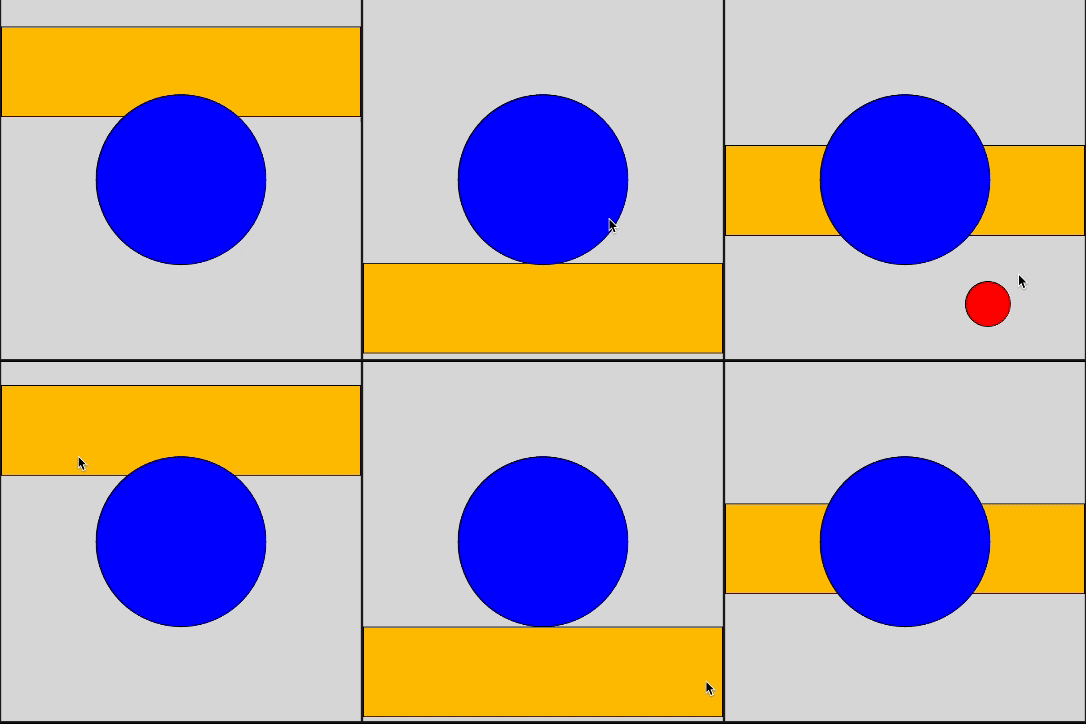
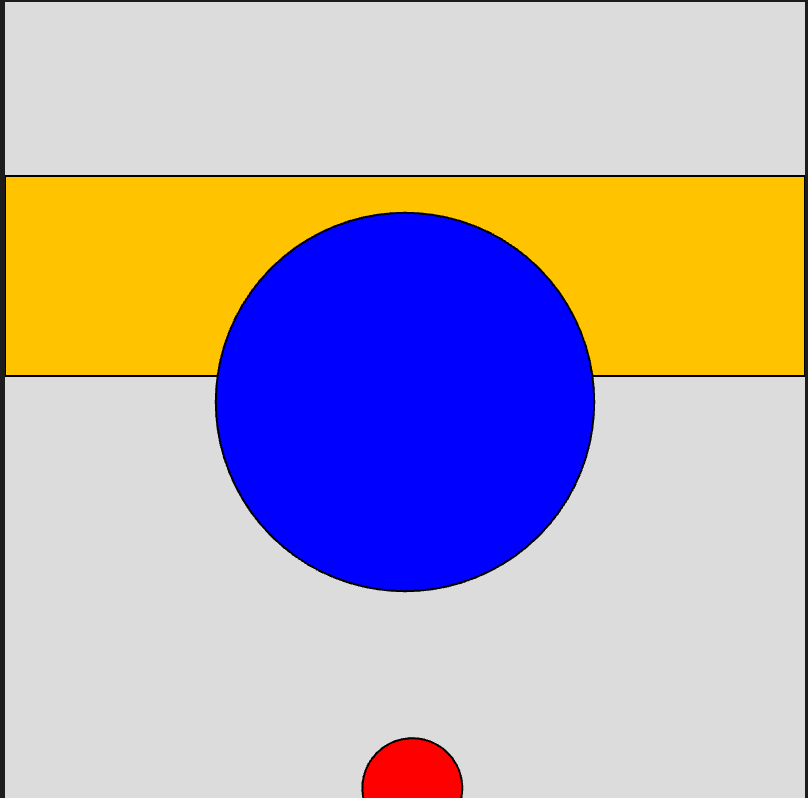
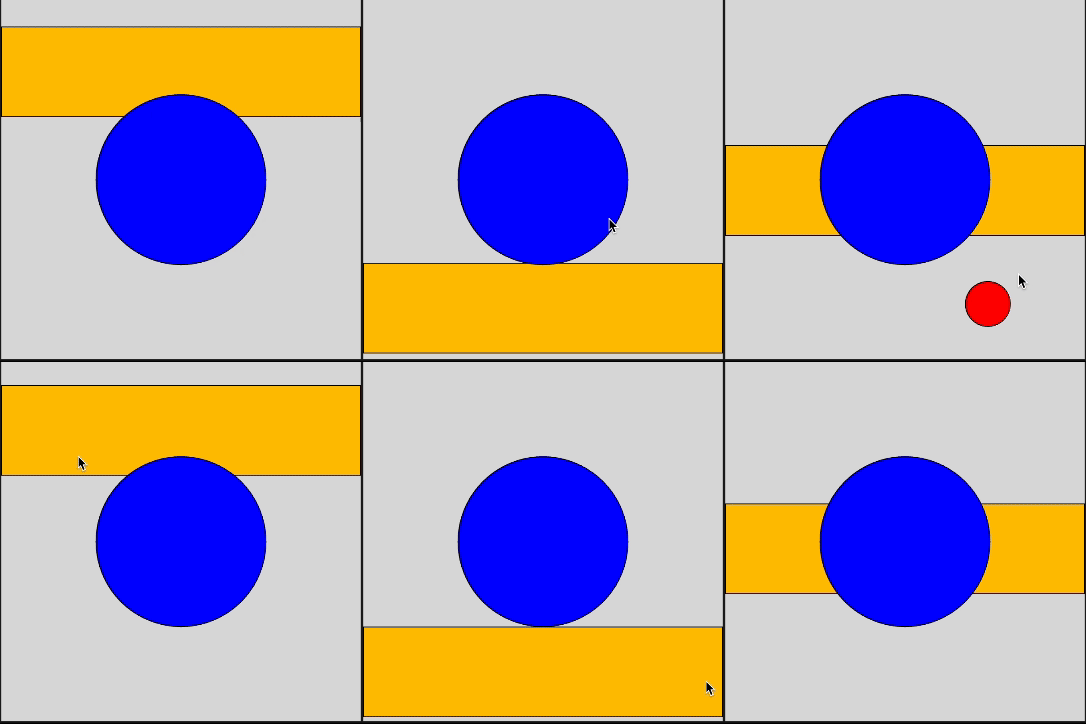
Here’s a link to my sketch: https://editor.p5js.org/ryrotella/sketches/-mgdKe2OW
I feel very comfortable with variables, and I had no problem with the homework. I did come across the rotate() function in the reference page. I really wanted to make a shape that rotated around the position of my mouse cursor. I researched online, and there were some solutions that included for-loops and cos/sin functions. That seemed more advanced than we were dealing with so I didn’t venture too much in trying that out yet.
For the assignment sheet, I tried the challenge on 3d.
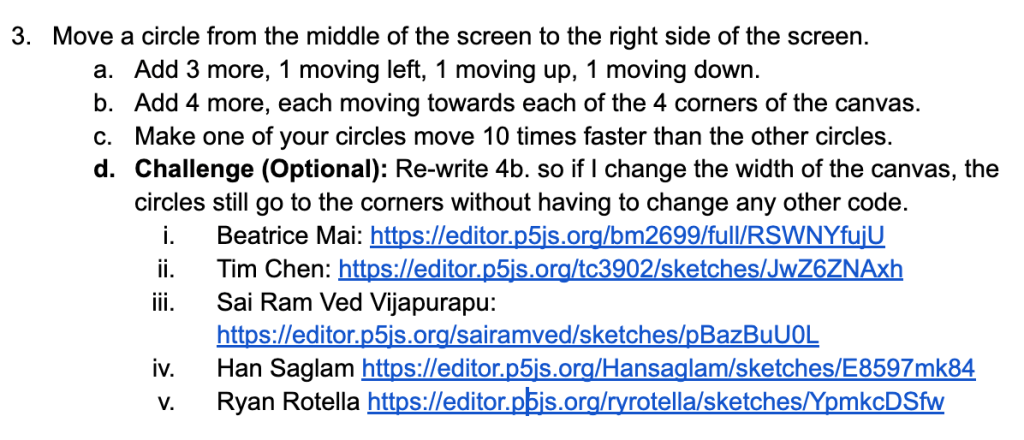
This challenge took some time, mainly because I wrote each circle with separate variables for x and y. I did this so they would behave differently.

I am curious as to how this can be written more efficiently with less lines of code and less repetitive steps. How can that be done?
Link to sketch: https://editor.p5js.org/ryrotella/sketches/YpmkcDSfw
Code:
let x;
let oneX;
let twoX;
let threeX;
let fourX;
let fiveX;
let sixX;


//eight circles total

let y;
let twoY;
let threeY;
let fourY;
let fiveY;
let sixY;


function setup() {
  createCanvas(700, 400);

  //first circle - move right (oneX, y)
  oneX = width/2;
  y = height/2;

  //second circle - move left (twoX, y)
   twoX = width/2;


  //third circle - move up (x, oneY)
  x = width/2;
  oneY = height/2;

  //fourth circle - move down (x, twoY)
    twoY = height/2;

  //fifth circle - move diagonally right top (threeX, threeY)

  threeX = width/2;
  threeY = height/2;

  //sixth circle - move diagonally left top (fourX, fourY)

  fourX = width/2;
  fourY = height/2;

  //seventh circle - move diagonally down right (fiveX, fiveY)

  fiveX = width/2;
  fiveY = height/2;

  //eigth circle - move diagonally down left
  //(sixX, sixY)

  sixX = width/2;
  sixY = height/2;


}

function draw() {
  background(220);


  //part 0 - move circle to the right
  circle(oneX, y, 50);
  oneX++;

  //refresh to center
  if (oneX >= width){
    oneX = width/2;
  }

  //part a - Add 3 more, 1 moving left, 1 moving up, 1 moving down.

  //circle moving to left

  circle(twoX, y, 50);

   twoX--;

  //refresh to center
  if (twoX <= 0){
    twoX = width/2;
  }

  //circle moving up

  circle(x, oneY, 50);
  oneY--;

  //refresh to center
  if (oneY <= 0){
    oneY = height/2;
  }

  //circle moving down
   circle(x, twoY, 50);
  twoY++;

  //refresh to center
  if (twoY >= height){
    twoY = height/2;
  }

 //part b - Add 4 more, each moving towards each of the 4 corners of the canvas.

  //slope between center and corner

  //top right corner will always be (width, 0)
  //center is width/2, height/2
  //slope = rise/run == y2 - y1 / x2 - x1
  //0 - height/2 divided by width - width/2


  let riseTRTwo = 0;
  let riseOne = height/2;

  let runTRTwo = width;
  let runOne = width/2;

  let slopeTRX =  runTRTwo - runOne;
  let slopeTRY = riseTRTwo - riseOne;

  let slopeTRXrate = slopeTRX / 100; //percentage of increase? don't understand how this math works, per se
  let slopeTRYrate = slopeTRY /100;

  //console.log(slopeTRXrate);
//   console.log(slopeTRY);

//   console.log(slopeTRY/slopeTRX);

  //circle moving diagonally upper right - x++, y--
  circle(threeX, threeY, 50);
  threeX+= slopeTRXrate/2; //divided by 2, just slows it down
  threeY+= slopeTRYrate/2; // already negative

  // console.log(threeY)

    //refresh to center

   if (threeY <= 0){
    threeY = height/2;
     threeX = width/2;
  }

  //circle moving diagonally upper left - x--, y--
  circle(fourX, fourY, 50);

  //left top corner - (0, 0)

   let riseTLTwo = 0;
  // let riseOne = height/2;

  let runTLTwo = 0;
  // let runOne = width/2;

  let slopeTLX =  runTLTwo - runOne;
  let slopeTLY = riseTLTwo - riseOne;

  let slopeTLXrate = slopeTLX / 100; //percentage of increase? don't understand how this math works, per se
  let slopeTLYrate = slopeTLY /100;

   fourX+=slopeTLXrate/2;
  fourY+= slopeTLYrate/2;

    //refresh to center
   if (fourY == 0){
    fourY = height/2;
     fourX = width/2;
  }

  //circle moving diagonally down right - x++, y++
  circle(fiveX, fiveY, 50);

  //dr corner - width, height
   let riseDRTwo = height;

  let runDRTwo = width;

  let slopeDRX =  runDRTwo - runOne;
  let slopeDRY = riseDRTwo - riseOne;

  let slopeDRXrate = slopeDRX / 100; //percentage of increase? don't understand how this math works, per se
  let slopeDRYrate = slopeDRY /100;

  fiveX+=slopeDRXrate/2;
  fiveY+=slopeDRYrate/2;


  //refresh to center
   if (fiveY >= height){
    fiveY = height/2;
    fiveX = width/2;

  }

  //circle moving diagonally down left - x--, y++

  //part c - move ten times faster than overs
  circle(sixX, sixY, 50);

    //DL corner - (0, height)

   let riseDLTwo = height;

  let runDLTwo = 0;

  let slopeDLX =  runDLTwo - runOne;
  let slopeDLY = riseDLTwo - riseOne;

  let slopeDLXrate = slopeDLX / 10;
  let slopeDLYrate = slopeDLY /10;
  sixX+=slopeDLXrate/2;
  sixY+=slopeDLYrate/2;

  if (sixY >= height){
    sixY = height/2;
    sixX = width/2;

  }


} Ryan Rotella
Leave a comment