In developing my Motion Capture project on masculine movements in American football and how they provoke emotion, I’ve begun a more production-oriented phase. This stage focuses on designing a movement database: a catalog of specific gestures, stances, and sequences to be captured in motion.
Characters and Embodied Roles
So far, I have three loose character sketches that guide my approach to movement:
- Players — the core of football’s action, embodying discipline, aggression, and spectacle through drills, blocks, tackles, and celebrations.
- Coach — a figure of authority and command, whose gestures (pointing, signaling, pacing) are less explosive but equally crucial in shaping the game’s embodied language.
- Fans — the emotional counterpart to players and coaches, whose cheering, chanting, and celebratory body language amplify football’s affective atmosphere.
By developing a move list across these roles, I can begin to stage football not only as an arena of entertaining athletic feats but as a layered cultural performance of American masculinity. I’m still grappling with how the narrative of this piece will take shape, or if this piece will be less narrative driven and more atmospheric with some potential narration.
Move List as Database
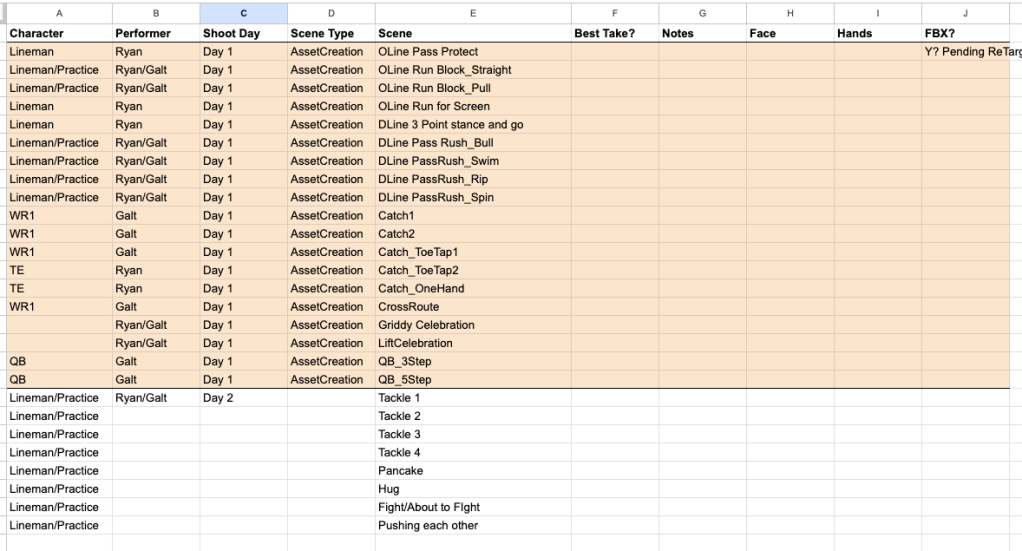
My current draft of the move list includes foundational lineman actions: pass protection, straight-ahead run blocking, pulling for a run, releasing for a screen, and lining up in a three-point stance. Each of these carries a distinct performance of aggressive masculinity — fulfilling your assigned task, protecting your fellow man, and dealing with opposition in pursuit of your goal.
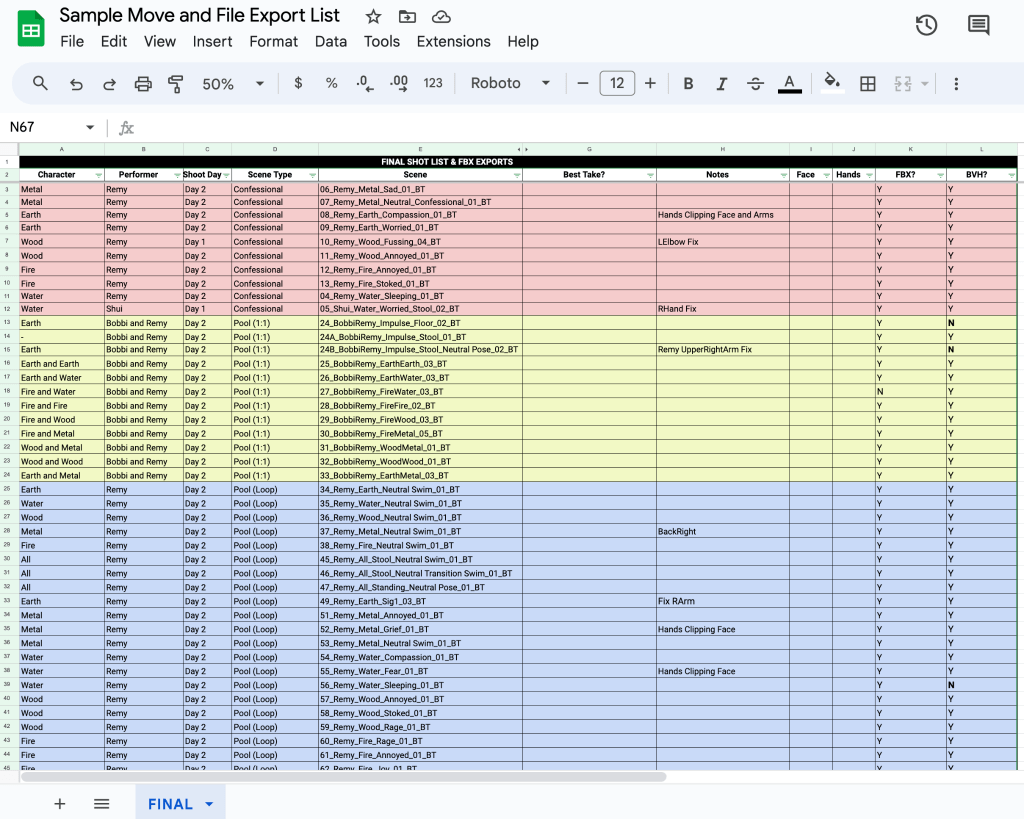
Thank you to Ami for sharing an image of an example move list, which I copied and fitted to my draft list.
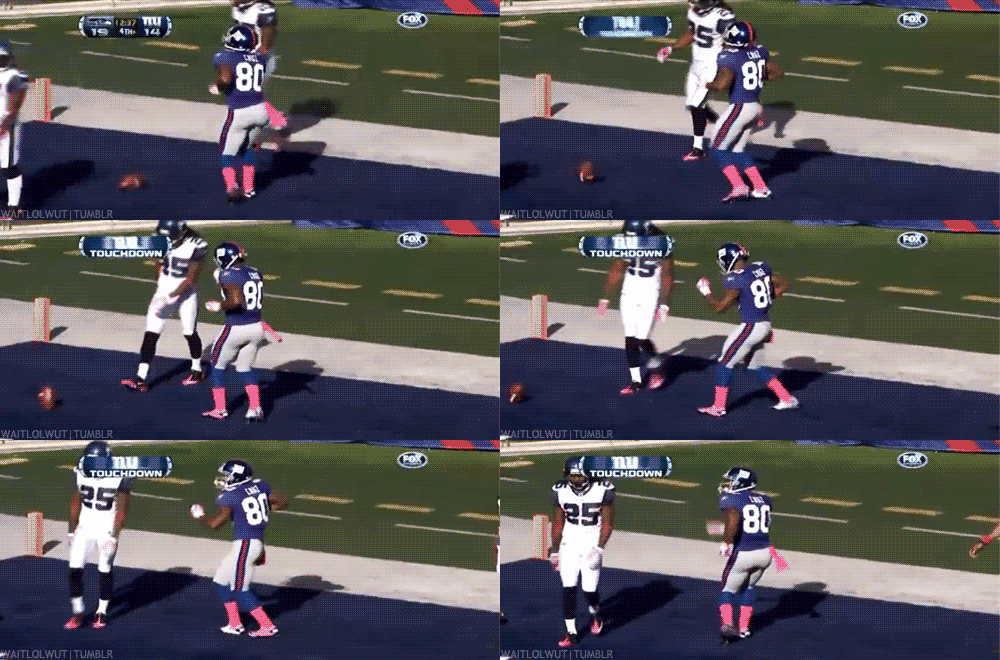
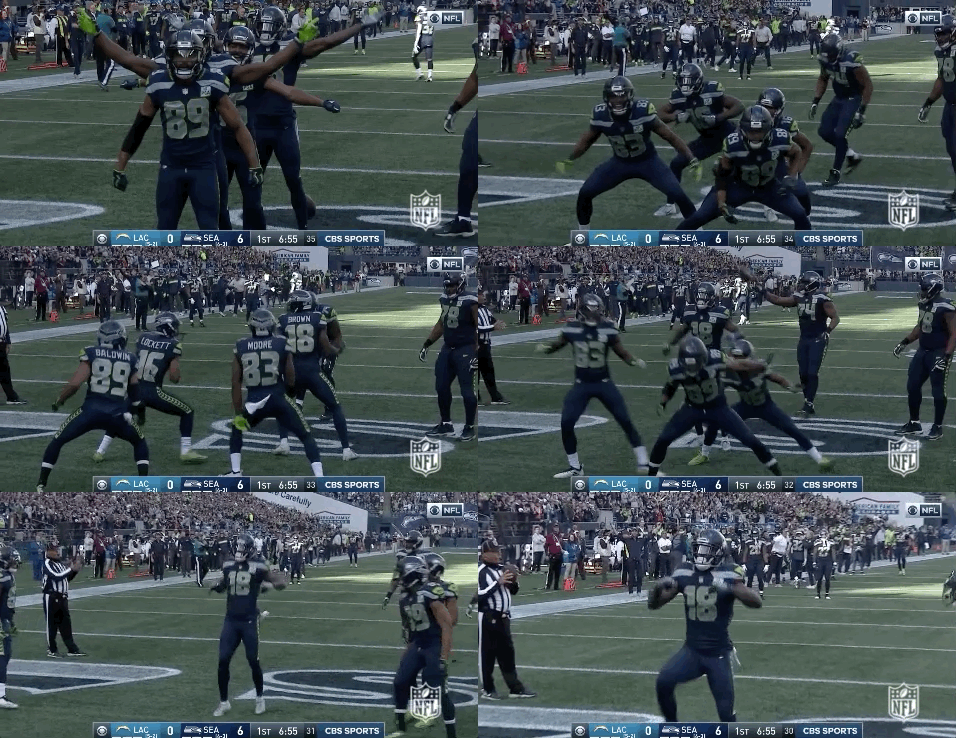
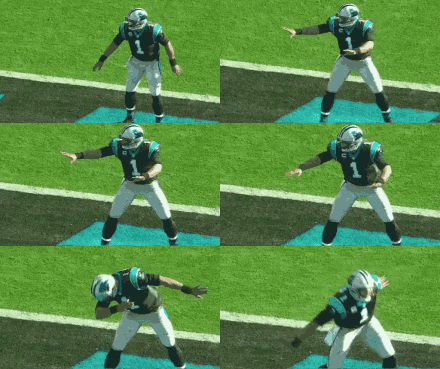
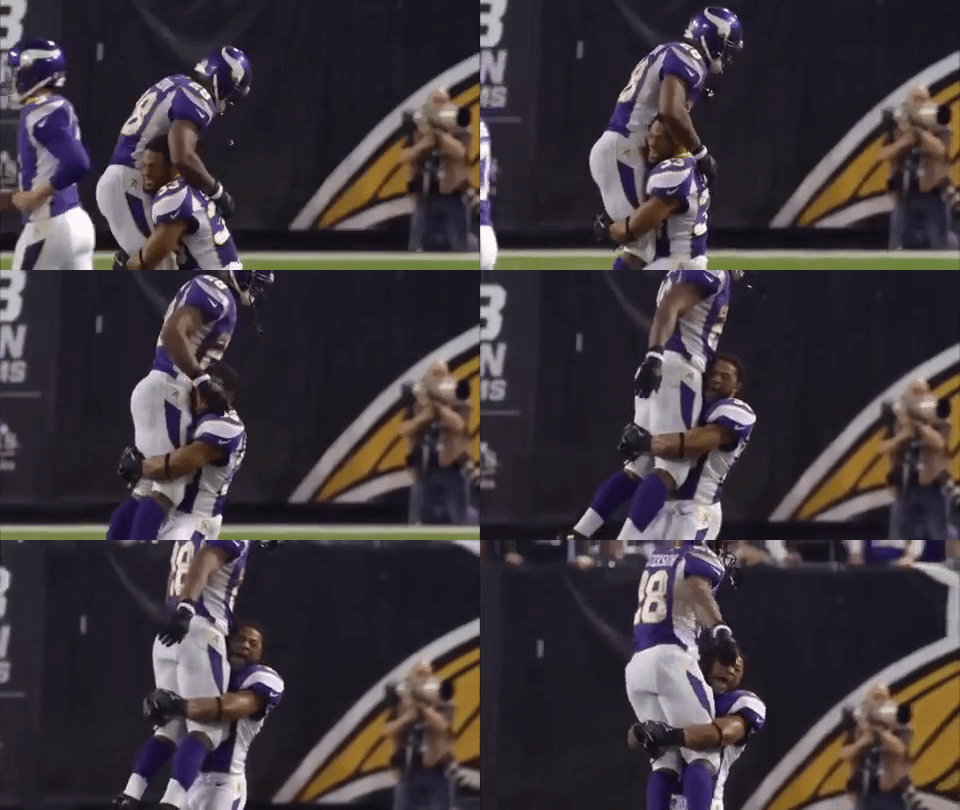
Alongside these technical moves, I also plan to improvise gestures drawn from NFL and college football highlights. These include sideline celebrations, touchdown dances, and famous moments of football iconography — from flexing and chest-pounding to choreographed group movements. Unlike drills, these choreographed performances are not taught but emerge suddenly after a touchdown, circulating through broadcast, replay, and social media. Capturing them alongside technical blocks foregrounds the tension between football as hard-nosed discipline and football as glitzy spectacle.
Preproduction and Setup
Preproduction involves both technical and performative preparation:
- Equipment: Optical motion capture with OptiTrack (cameras, suits, markers), supplemented by a marked football as a rigid body so that the ball itself becomes a tracked object. This will help contextualize throws, carries, and spikes. Also, a crash pad so that we can fall safely in the space.
- Setup: A capture volume large enough to allow for short bursts of linear and lateral movement as well as the ball being thrown.
- Performer prep: Warm-ups that simulate game readiness, since momentum and explosiveness are integral to football movement. Sessions will include space for improvisation to mimic highlight-driven celebrations.
- Props: The football
- Pipeline: Ideally, the captured data will be streamed in real-time to Unreal Engine. Using Live Link for facial capture while simultaneously running OptiTrack through Motive will allow the project to sync full-body movement with expressive facial data, creating a layered performance that can be visualized instantly in-engine.
First Motion Capture Session
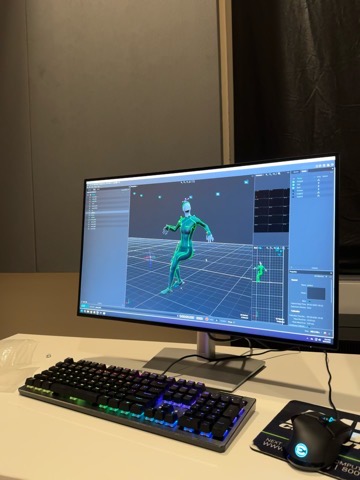
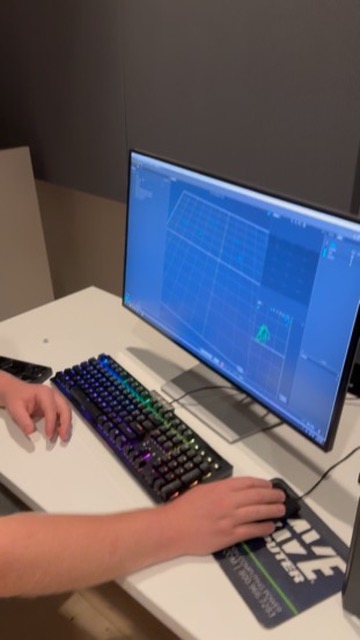
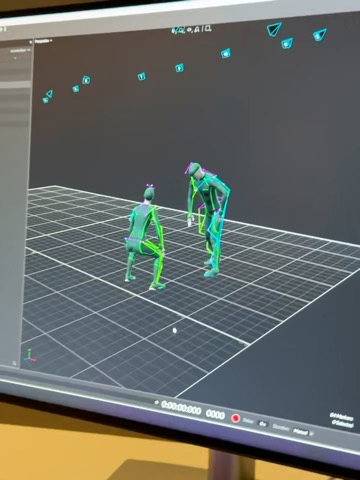
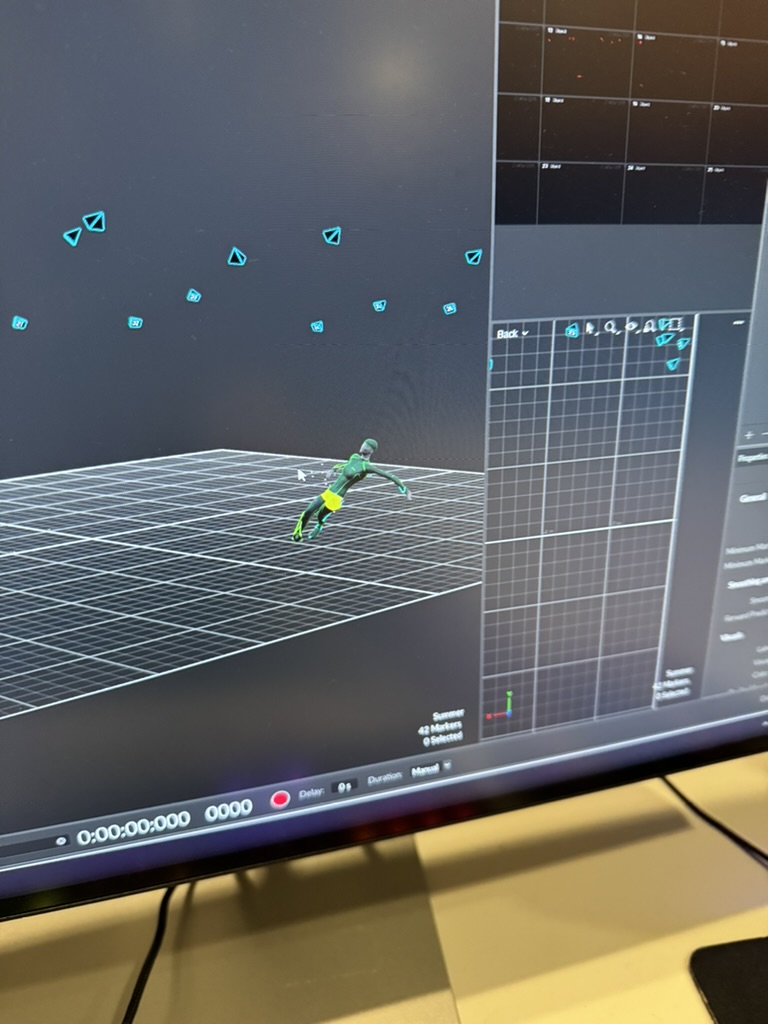
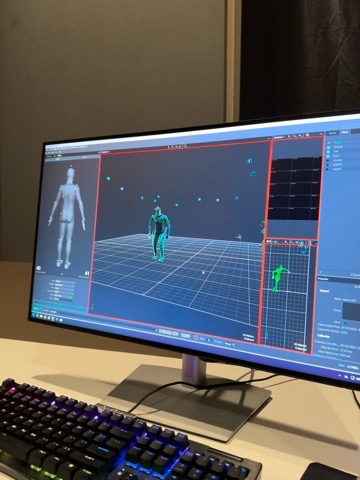
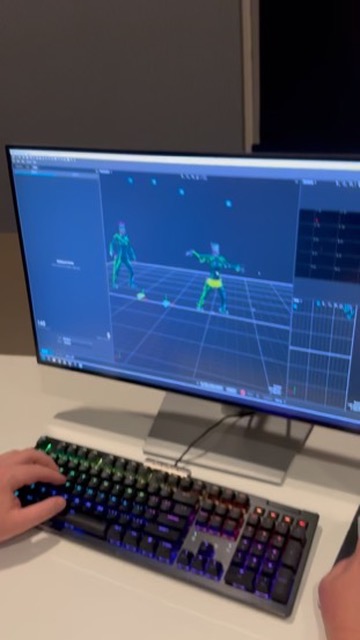
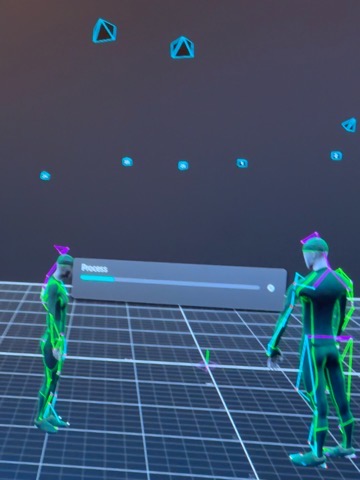
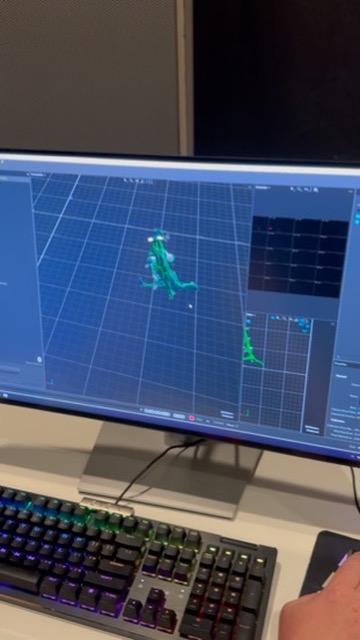
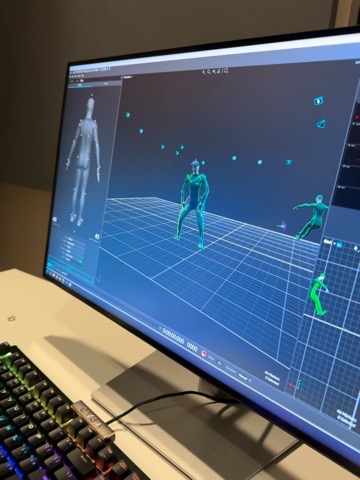
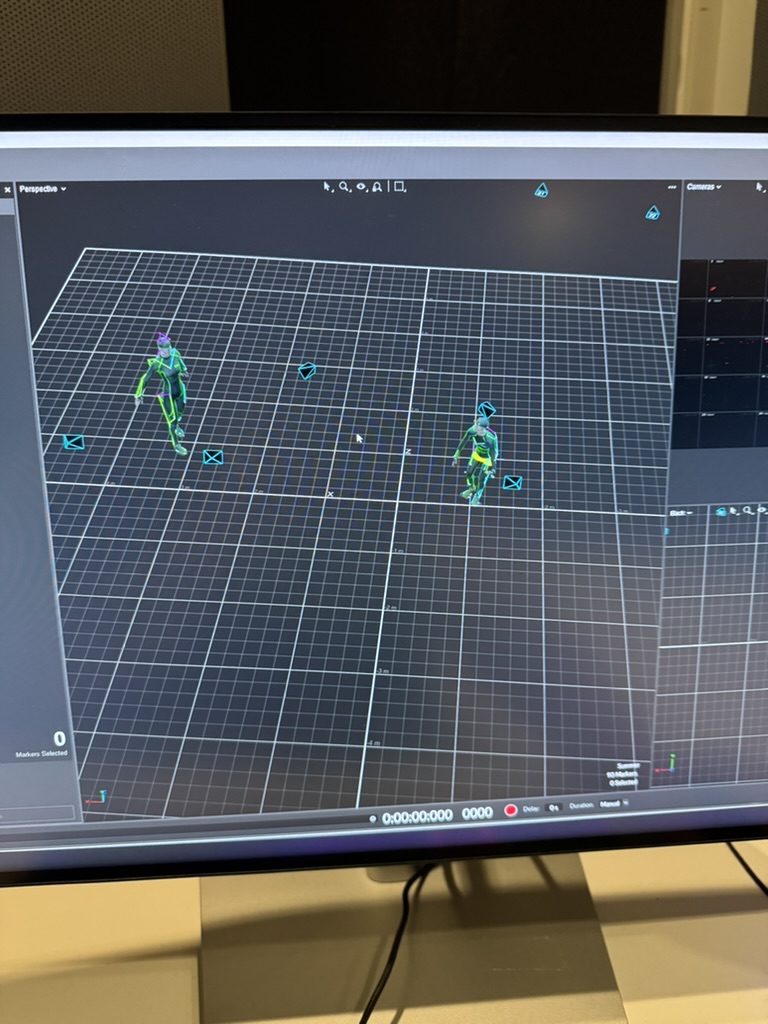
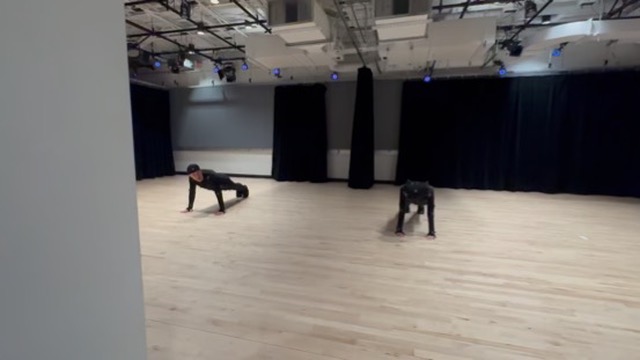
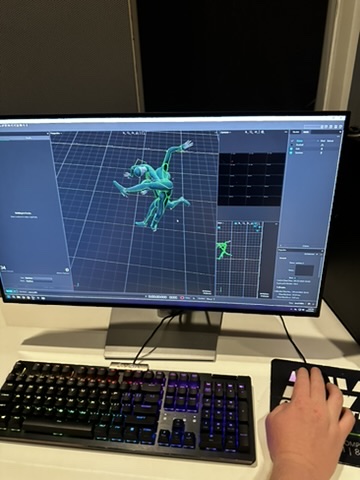
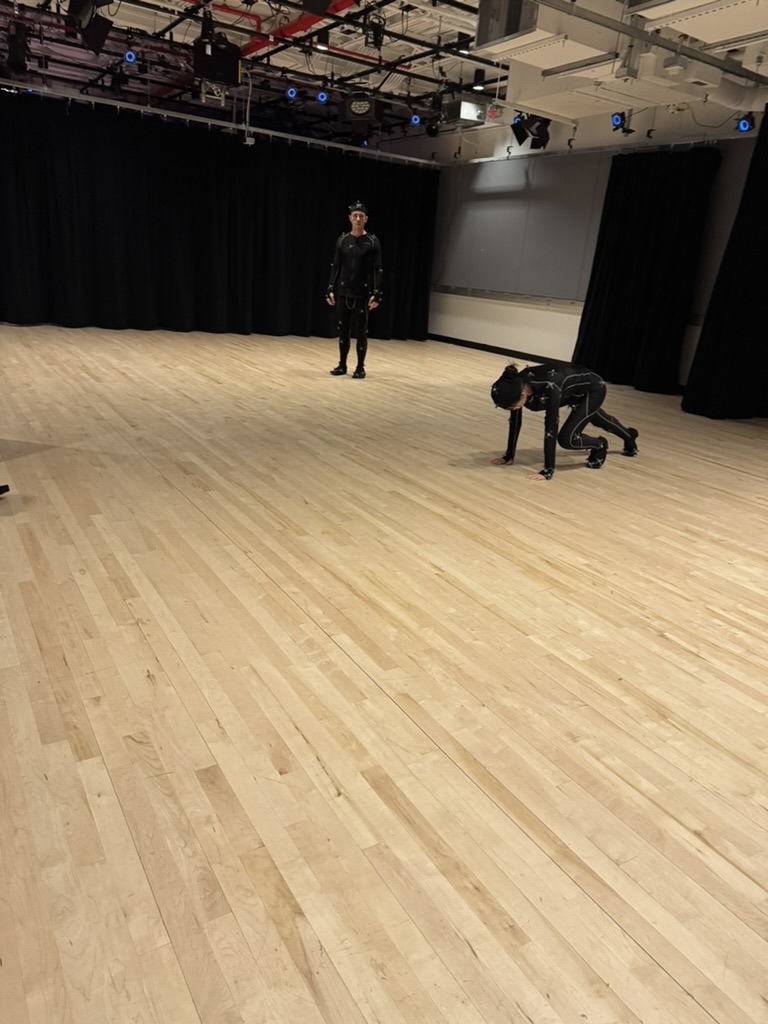
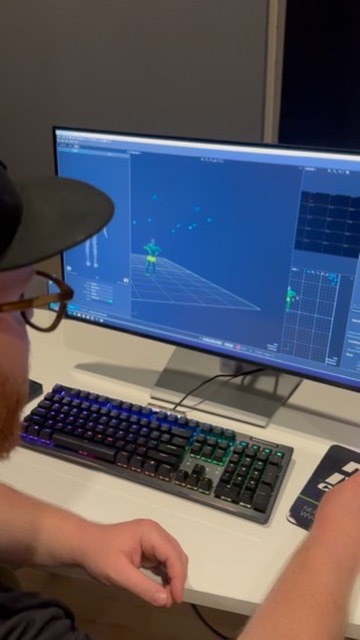
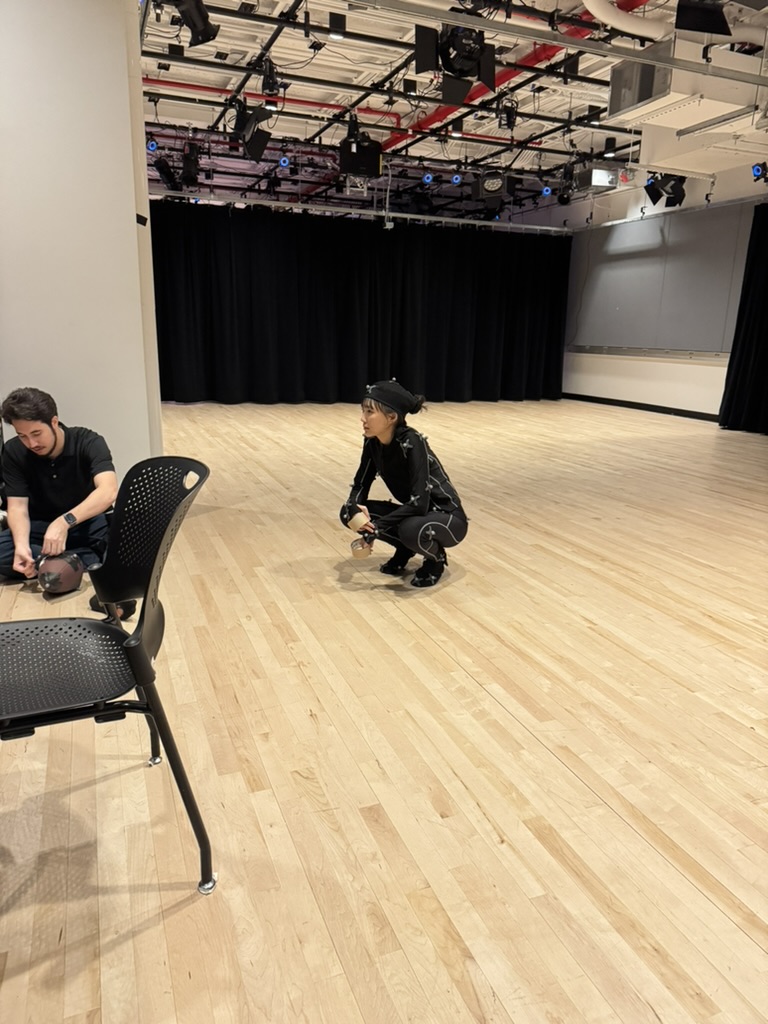
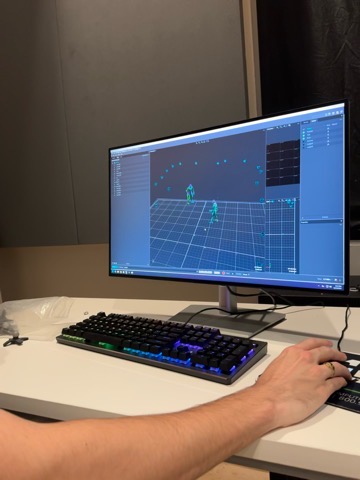
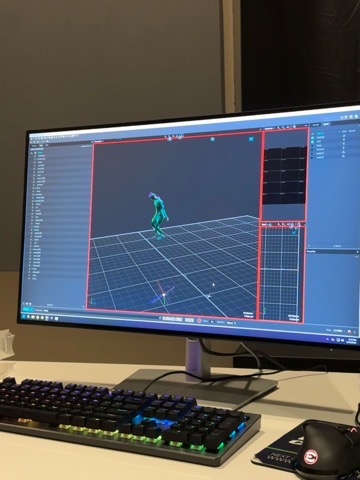
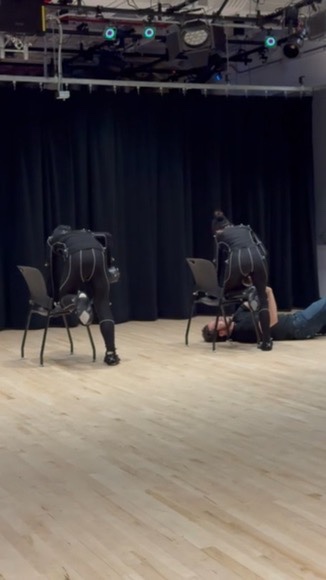
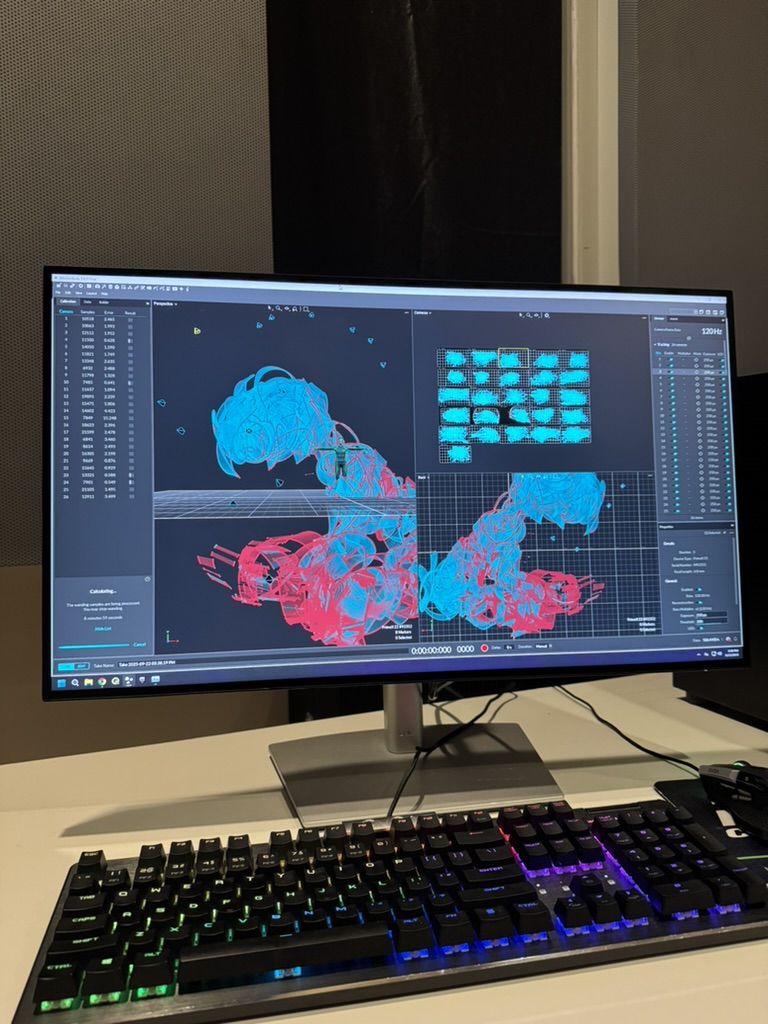
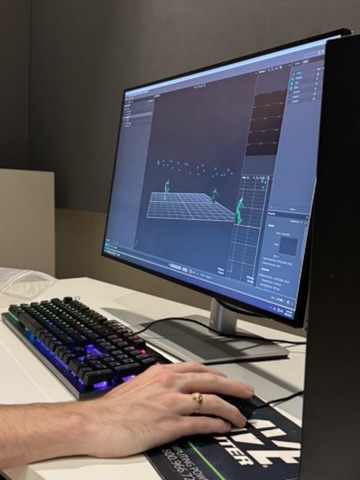
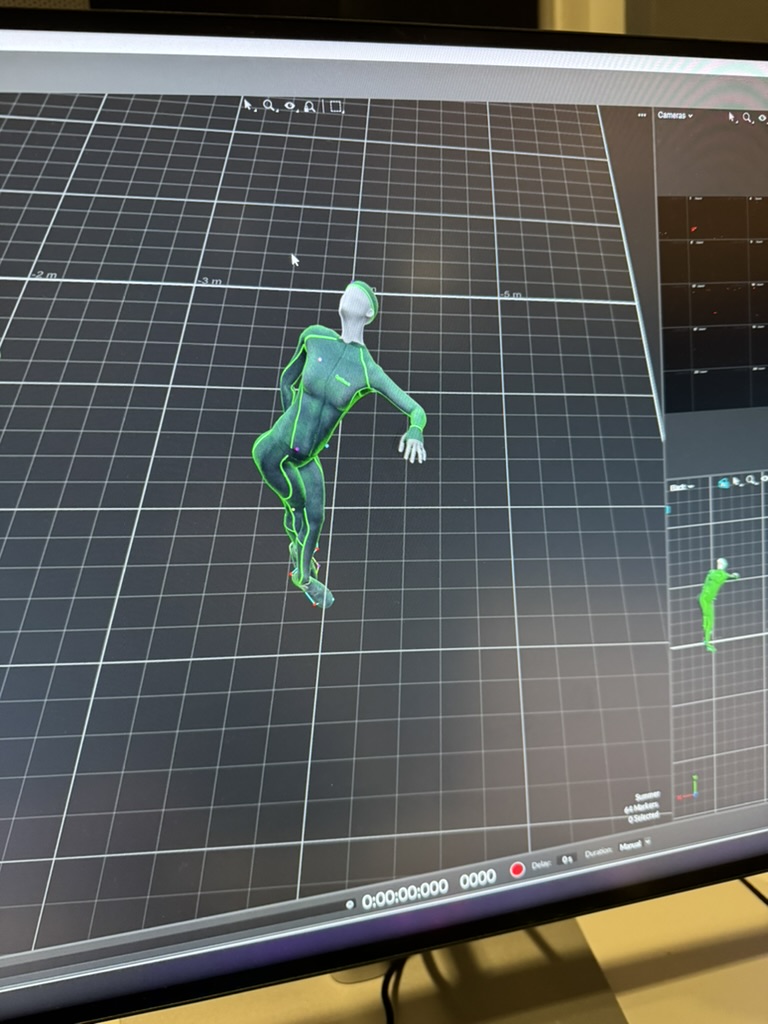
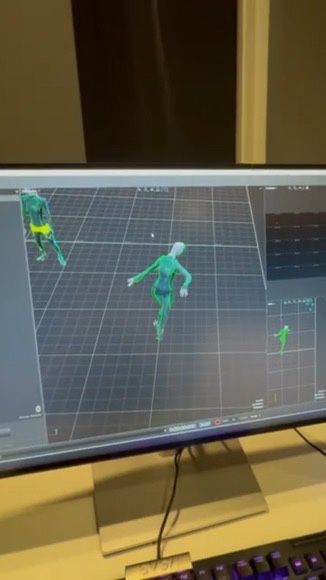
Last week, my group had its first Motion Capture session in the NYU Media Commons Ballrooms. The session was very fun and also informative about the technical hurdles that were referenced in class: calibrating the OptiTrack cameras, dealing with occasional hardware lag, and making sure to T-pose before and after every single take. That last step is essential, since a neutral pose is required to properly retarget movement data to a 3D model. Experiencing these processes firsthand gave me a better understanding of both the precision and the patience required to make motion capture sessions successful.


Potential Collaboration
Ideally, collaboration with coaches or current players would bring a lot of accuracy to the project, ensuring that all techniques are represented authentically. This would also create a realistic football environment to create the proper feelings out of. However, since this work coincides with football season, logistics hamper that possibility. Instead, I will rely on my own embodied knowledge as a former player, archival game footage, and digital reference material to guide the move list unless collaboration somehow becomes possible.
OptiTrack Considerations
OptiTrack is well-suited to capturing explosive starts, shifts of weight, and directional changes common in football. Isolated blocking and stance work capture cleanly, as do celebrations. Tackling, however, poses a unique challenge. Because it involves collision between multiple performers, markers are likely to get tangled up or fall off, and the sequence requires significant cleanup. In MotionBuilder, this would mean re-targeting collisions, often reconstructing them as choreographed interactions rather than raw capture.
To approach tackling safely and practically, I will make use of a crash pad provided by the Media Commons. This allows my group to stage falls, impacts, and ground contact, while still preserving the embodied weight and momentum of a tackle. Partial sequences — such as lowering into contact, wrapping arms, or the impact and fall to the ground — could be captured in segments, then stitched together or augmented in postproduction (though I don’t want to give Michael too much work).
By pairing Motive for OptiTrack with Live Link streaming into Unreal Engine, we can monitor these movements in real time, blending body capture with facial data. This hybrid workflow not only speeds up iteration but also creates opportunities to see football movements rendered directly in digital environments, bridging capture and visualization. The hard part will be figuring out how to set up that pipeline, but once we do, the possibilities are very exciting.
Preservation and Erasure
Football movements have been preserved quite well. So many highlights and tutorials for drills exist online. Entire games from decades gone by are easily accessible on top of all the documentaries of football that exist. However, the micro-moments of emotional exchange between players, coaches, and fans are fleeting and not thought of as significant in the grand scheme of the game. They are common with the sport, a mundane ritual between the moments of excitement. In these underappreciated moments, I feel there is some emotional channel from men that opens up, which is otherwise closed or repressed. I want to slow down and absorb these moments of expression and really analyze what masculine bodies are “letting out” through the game of football.
 Ryan Rotella
Leave a comment