- Why the Pivot?
- Exploration 1: How to Tell a Gambling Story?
- Exploration 2: How to Integrate Swift Data with TouchDesigner for Face Capture?
- Next Steps
- Questions for You
This week marked a significant pivot in my thesis direction. After exploring theatrical immersive performances over the past few weeks, I’ve decided to shift toward creating a satirical gambling app that reveals the gambling logic embedded throughout modern society. This experience will combine a mobile app built in Swift/SwiftUI with projection mapping via TouchDesigner, using sports betting UI as a Trojan horse to explore how we’ve gamified every facet of society from the macro (ex. Economy, Stock Value) to micro (ex. relationships).
Why the Pivot?
As I started to seriously consider the logistics of organizing a theatrical performance for next semester, I quickly became overwhelmed. The reality of coordinating performers, securing rehearsal space, competing for resources during finals week when everyone else is also mounting their thesis projects—it all made me worried that I couldn’t pull off the performance I really wanted within this timeframe. I kept thinking about tech rehearsals, scheduling conflicts, the unpredictability of working with live performers, and whether I could realistically create something polished enough to meet my vision.
This anxiety led me to reconsider the form entirely. What if instead of a large-scale theatrical production, I created something more mobile and flexible? An app-based experience with projection could be set up in different spaces, doesn’t require coordinating multiple people’s schedules, and gives me more control over the final execution. It still has immersive potential and still creates that one-on-one vulnerability I’ve been seeking, but the technical challenges feel more within my grasp than the logistical challenges of live performance.
Exploration 1: How to Tell a Gambling Story?
Question/Hypothesis: Can I use the familiar interface of sports betting apps to gradually reveal how gambling logic has infiltrated every aspect of our lives?
I developed a rough narrative arc for the experience:
The user begins by scrolling through a TikTok-like video feed, seeing fan edits of athletes and sports highlights (a mix of real footage and content I’ll create). Advertisements punctuate the feed increasingly—growing larger and more intrusive until they become unavoidable (could also model real-life app – https://www.cheddr.xyz/).
Eventually, the ads swallow the screen entirely and transport the user into “Bet Kings,” a sports gambling app.
The initial bets are innocent: wager on a sports event, win on your first try. The projection system displays the race or game unfolding in real-time. Perhaps facial recognition requires you to smile to place bets.
But the app doesn’t stay confined to sports. The bets gradually shift toward real-world events (a la Polymarket): election outcomes, monthly mass shooting counts, corporate profitability, personal job security.
Then they become intimate and existential: Will I get laid off in 6 months? Will something bad happen if I go outside today? Will this next video bring me joy or make me furious? Will this next swipe bring me love?
The descent continues: Will I ever be in love? (12% yes, 86% no, 2% unsure)
Will anything I do ever be good enough?
When’s it all gonna come crashing down?
Once the user accumulates debt in the app, the advertisements transform—Klarna, DoorDash, ICE recruitment, porn (reference to it – not actual), algorithmic slop. This slop coalesces into a demonic entity made of pixels and video fragments. Using the front-facing camera, this entity responds to the user’s movements. The final message: “Call 1-800-GAMBLER for any gambling or systemic issues”
Maybe call the actual hotline??
What I Learned: This narrative structure answers my question about vulnerability from last week’s post. By starting with something familiar and ironically predictable (sports betting), I can gradually pull back the curtain to reveal the deep rot in our systems. The progression from sports → politics → existential dread → personalized horror creates a journey that’s both satirical and genuinely unsettling. Using humor as a way to process everyday horror.
New Discovery: The transition from external bets (sports, elections) to internal bets (love, self-worth, art-making) is where the experience becomes most powerful. This is where I need to lean in hardest. The gambling metaphor works because we’ve been conditioned to view everything—including our innermost lives—as uncertain outcomes we’re constantly wagering on.
Exploration 2: How to Integrate Swift Data with TouchDesigner for Face Capture?
Question/Hypothesis: Can I successfully send real-time face tracking data and video from an iOS device to TouchDesigner for responsive projection?
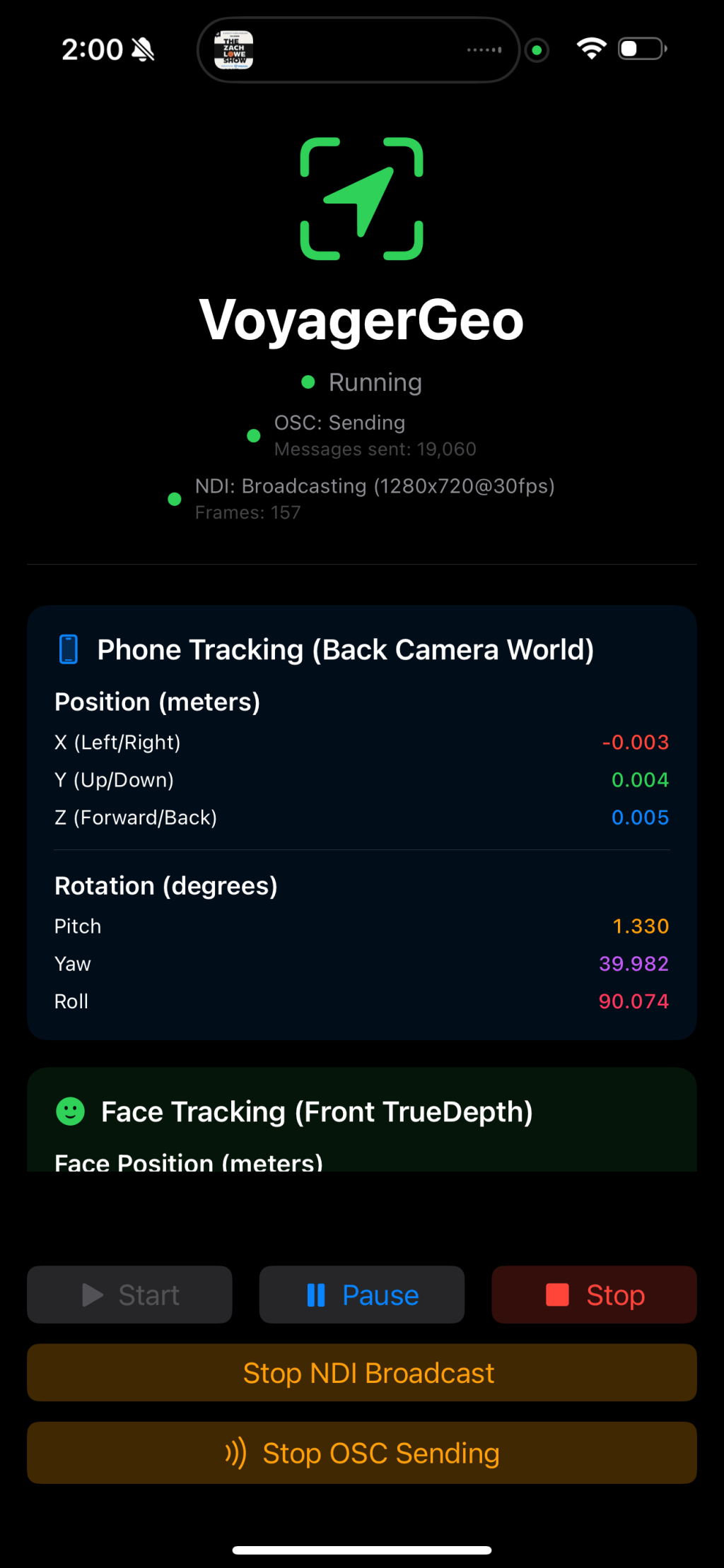
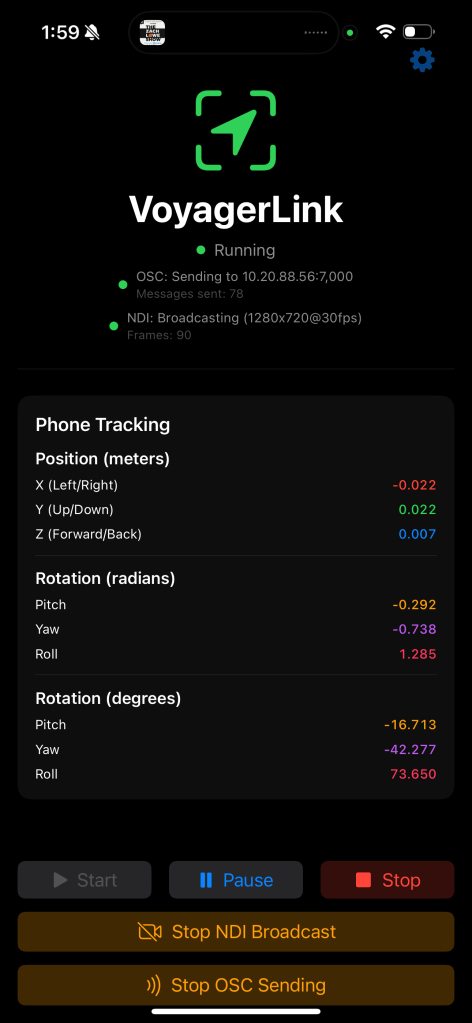
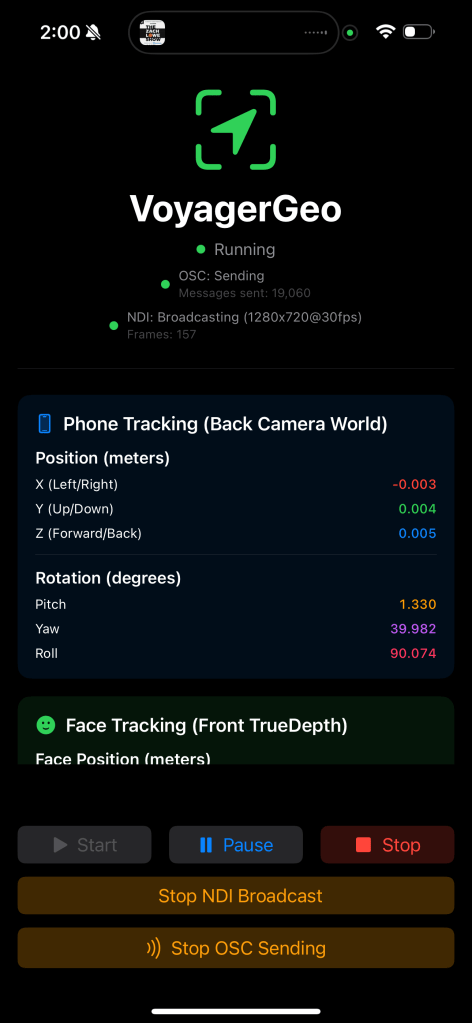
Result: It worked incredibly well. I successfully transmitted video from the iPhone’s front camera using NDI (Network Device Interface) via Swift, along with face blend shape data through OSC (Open Sound Control). This means I can capture facial expressions—smiles, frowns, eye movements—and have the projected content respond in real-time.


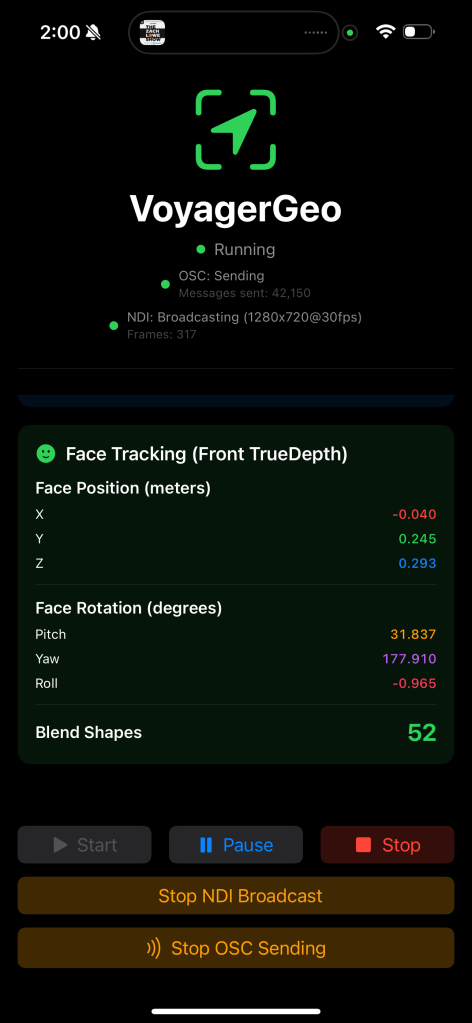
The technical breakthrough here opens up several interaction possibilities:
- Requiring the user to smile to place bets (as mentioned in the narrative)
- Having the “demonic entity” in the final section mirror or react to the user’s face
- Tracking emotional responses throughout the experience
- Creating uncanny moments where the projection seems to “see” the user
What I Learned: The technical pipeline is more accessible than I anticipated. The combination of NDI for video streaming and OSC for data transmission gives me a robust foundation for real-time interaction between the mobile interface and projection system.
New Discovery: Face tracking could be an avenue to making the user feel immersed in the experience. When the app can explicitly detect if you’re smiling, frowning, or looking away, it creates a level of surveillance that mirrors the actual surveillance capitalism the piece critiques.
Next Steps
- Build a functional prototype of the core betting progression, even if it’s just a few screens that demonstrate the shift from sports betting to existential betting
- Create or source video content for the TikTok feed section and the projected events
- Design the visual language for how the “slop demon” manifests—what does algorithmic horror look like?
- Test the smile-to-bet mechanic—is it actually funny/affecting or just annoying?
- Plan the physical setup—what’s the relationship between the handheld device and the projection? How does the user move through the space?
Questions for You
- On the pivot: Does shifting from theatrical performance to app + projection feel like I’m avoiding the harder challenge, or does it feel like a smart adaptation to constraints? Am I losing something essential by going this direction?
- On the narrative arc: Does the progression from sports betting → real-world events → existential questions feel natural, or does it need more intermediate steps? Where do you think the experience might lose people?
- On the ending: Is the demonic entity too on-the-nose? Should the horror be more subtle, or do we lean into full confrontation?
- On scope: What feels like the essential core I absolutely must nail, versus what could be simplified or cut?
 Ryan Rotella
Leave a comment