Author: Ryan Rotella
-

Collective Play, Week 1
Assignments Read: Bitter Pill by Rachel Aviv, The New Yorker (Apr, 2019) Write a short description of something you do that is absurd In our Collective Play class, absurdity is defined as a person using a method/behavior, a, in full belief that it will accomplish a purpose, b, for that person. Method a never works…
-
Modern Artifacts, Week 1
Notes Read the introduction to Collective Wisdom. Ali asked us to write by hand our thoughts on the reading. Our thoughts are easier to remember when they’re written by actual hand and not typed out. My hand got a bit sore; it’s been too long since I’ve used a pencil. Sculpture I plan to use…
-

Week 1, Syllabus Review
Reviewing the syllabus for Energy fascinated me greatly as the assigned readings about the current administration’s gutting of clean energy dismayed me. Holding both these feelings together seems like an overall positive for this course as I feel better prepared to prepare my community for increasing energy-related challenges. The syllabus sparked those feelings and also…
-

MoLab: Week 1 blog
1/21/2025 – did first 2 days of 100 days of SwiftUI Nothing too groundbreaking here. Introduces variables (declared with var), constants (declared with let), printing, integers, strings, multi-line strings, string interpolation, booleans. Videos go over basic core concepts in most programming languages. It is really nice that Swift is a newer language that emphasizes convenience,…
-
Hypercinema Final
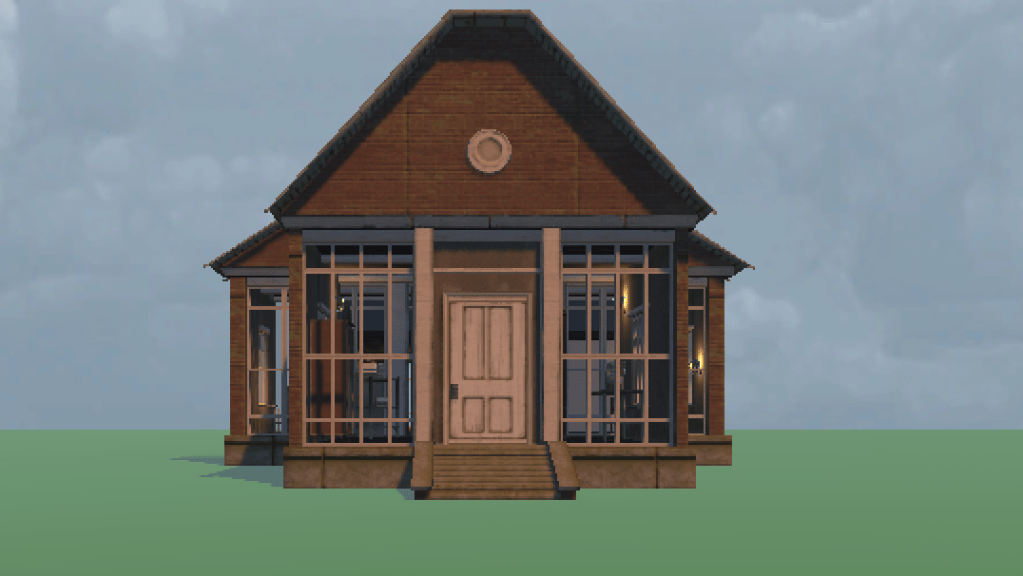
The Tao of Deluge Concept In September of 2024, Hurricane Helene struck the United States, particularly the Southeastern region. This region of the country, a place I call home in East TN and Western NC, is not used to dealing with such a major storm. While away at a school here at NYU, I had…
-
Pebble: A Social Aide
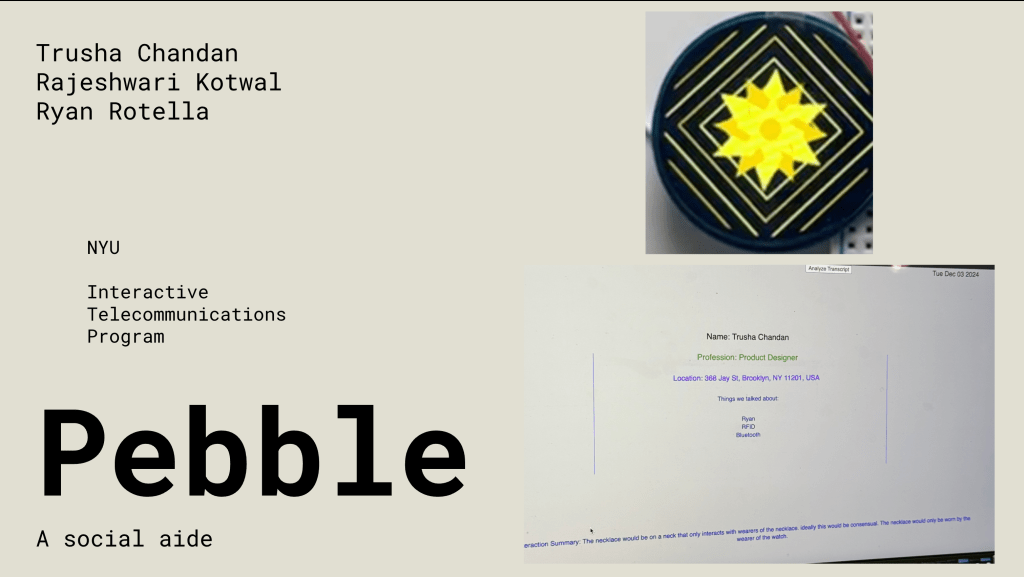
Concept: Supporting Socializing with Thoughtful Technology Technological interactions and social interactions are seen as polar opposites. Person-to-person interactions require attentive listening, open communication, and an effort to sustain dialogue. More often than not, technological interactions demand a user’s attention away from other people, their environment, and inertia to stay in one place and stare at…
-
Automatic Listener and Notetaker
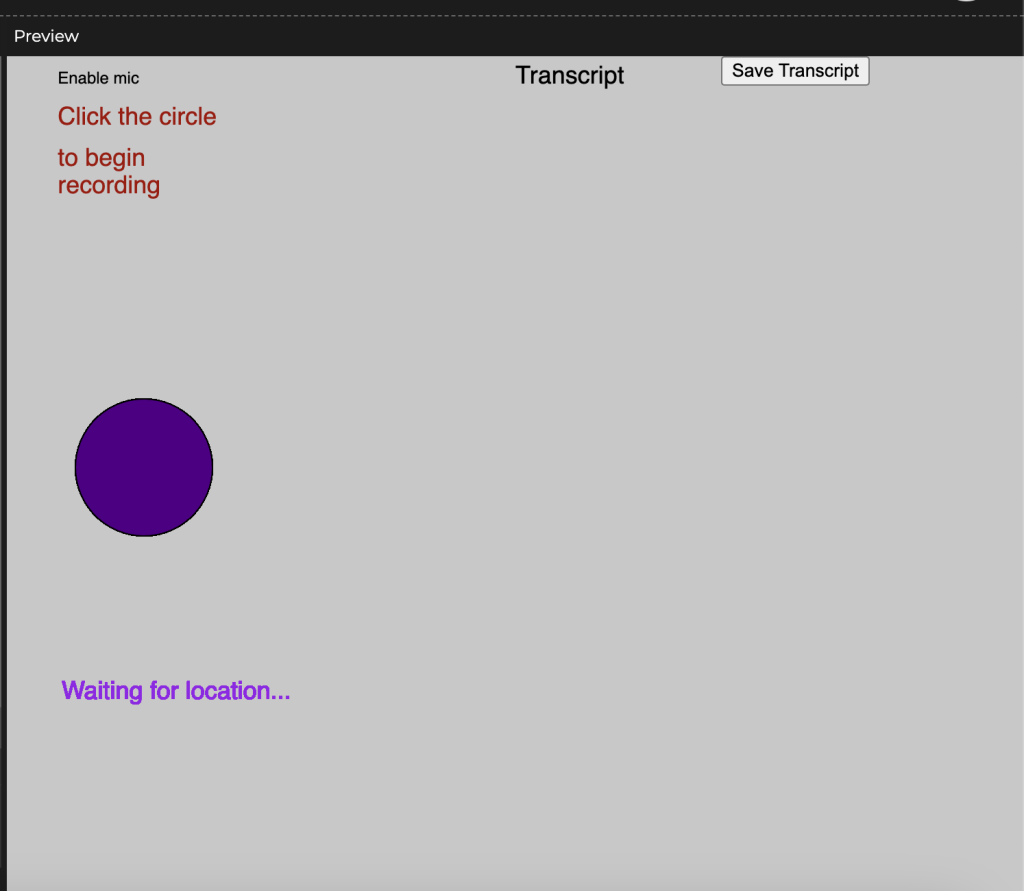
Sketch: https://editor.p5js.org/ryrotella/sketches/WCOvX293Jr Full sketch doesn’t work on web editor so here are the files to run locally. Also need Transformers python, Tensorflow.js, and other dependencies to run on machine. Link to files: https://drive.google.com/drive/folders/1aS-sNC9SU3haUDnsFN-2fC8SSKLuzDQK?usp=drive_link
-
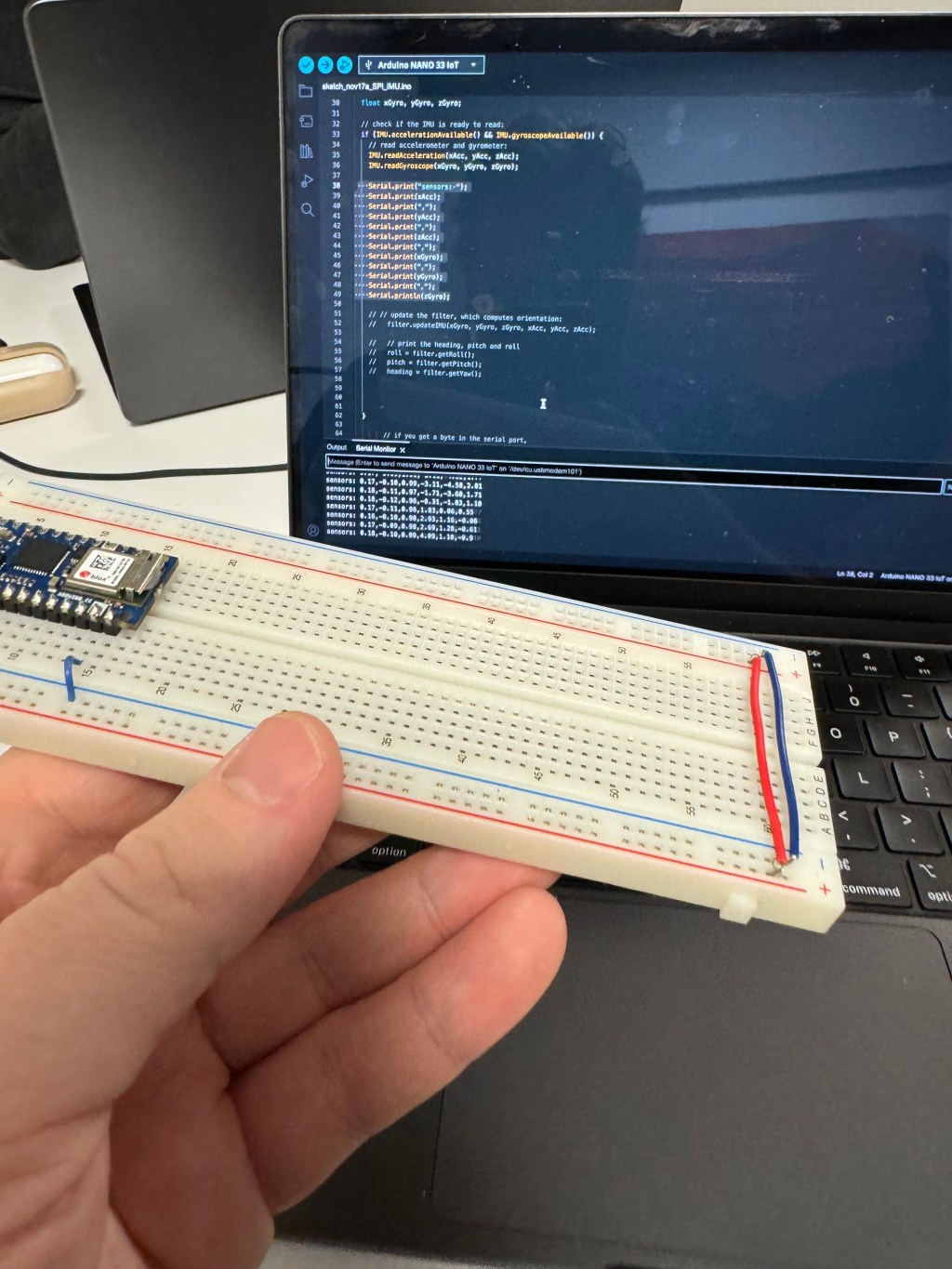
Lab: I2C/SPI
For this week’s lab, I focused on the aspect that served my joint Physical Computing-ICM final project: data collection. I am working with Trusha Chandan and Rajeshwari Kotel on developing a wearable device that uses proximity detection, audio recording, and machine learning to help remember people’s names after first time social interactions. To acheive this,…
-
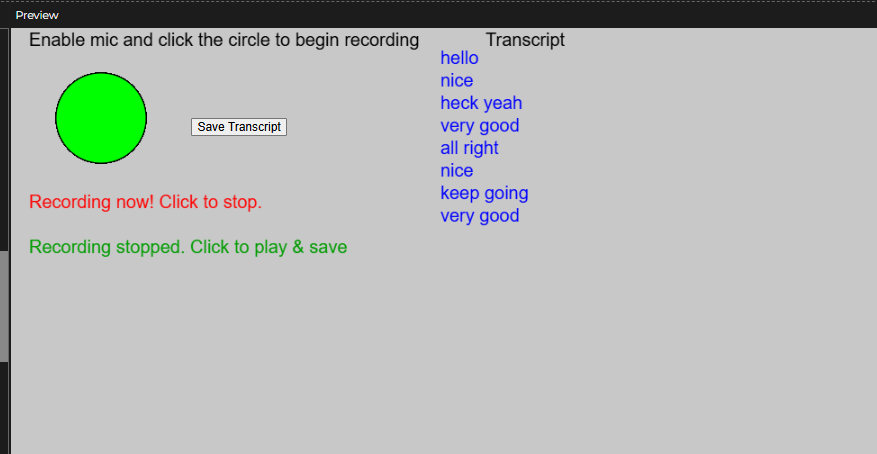
Listening and Recording with P5.js
As part of our eventual Final Project for ICM and Physical Computing, Trusha and I decided to use this ICM Homework to test how well P5.js can listen and record conversation. We want to do this for our larger goal of using technology to help people remember interactions and make note-taking social interactions seamless and…
-
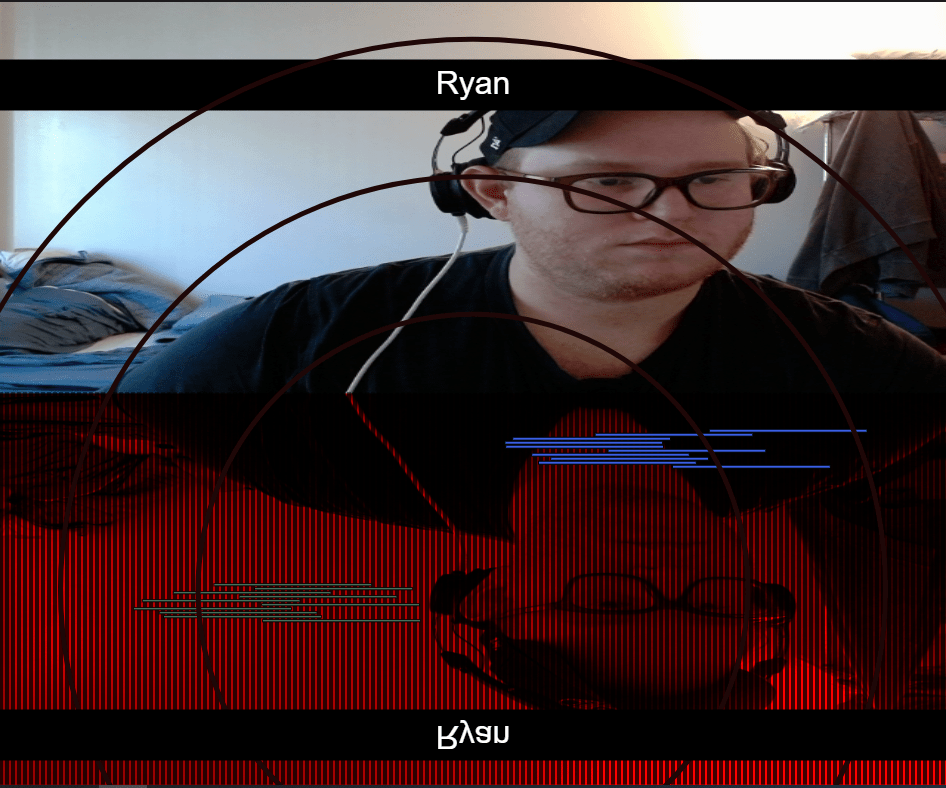
The Upside Down V.2
Sketch: https://editor.p5js.org/ryrotella/sketches/8JmpBweFV Concept As noted in the previous post about this assignment, I wanted to make a scary alternate reality of a live video with ml5.js, showing an “Upside Down” world parallel to ours. This is an homage to the Netflix hit series, Stranger Things. I wanted the altered video to feel ominous and surreal. Breakdown I also…
 Ryan Rotella