Category: Physical Computing
-
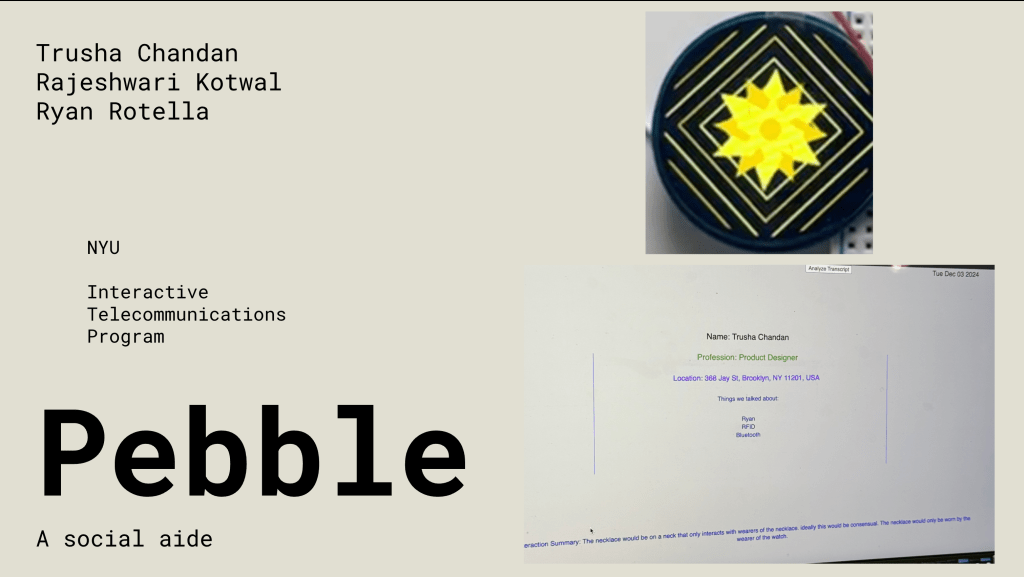
Pebble: A Social Aide
Concept: Supporting Socializing with Thoughtful Technology Technological interactions and social interactions are seen as polar opposites. Person-to-person interactions require attentive listening, open communication, and an effort to sustain dialogue. More often than not, technological interactions demand a user’s attention away from other people, their environment, and inertia to stay in one place and stare at…
-
Lab: I2C/SPI
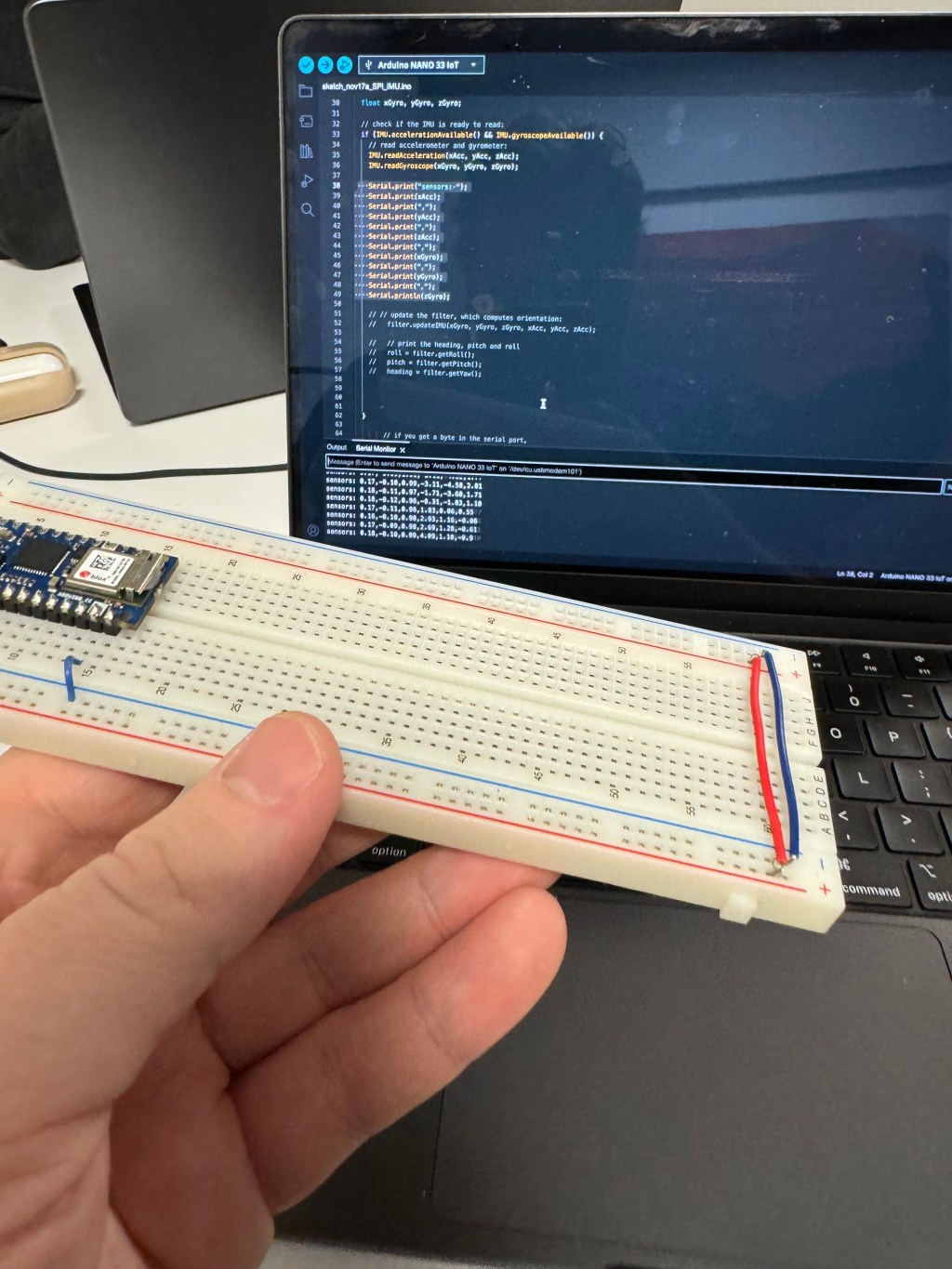
For this week’s lab, I focused on the aspect that served my joint Physical Computing-ICM final project: data collection. I am working with Trusha Chandan and Rajeshwari Kotel on developing a wearable device that uses proximity detection, audio recording, and machine learning to help remember people’s names after first time social interactions. To acheive this,…
-
Two-Way Serial Communication
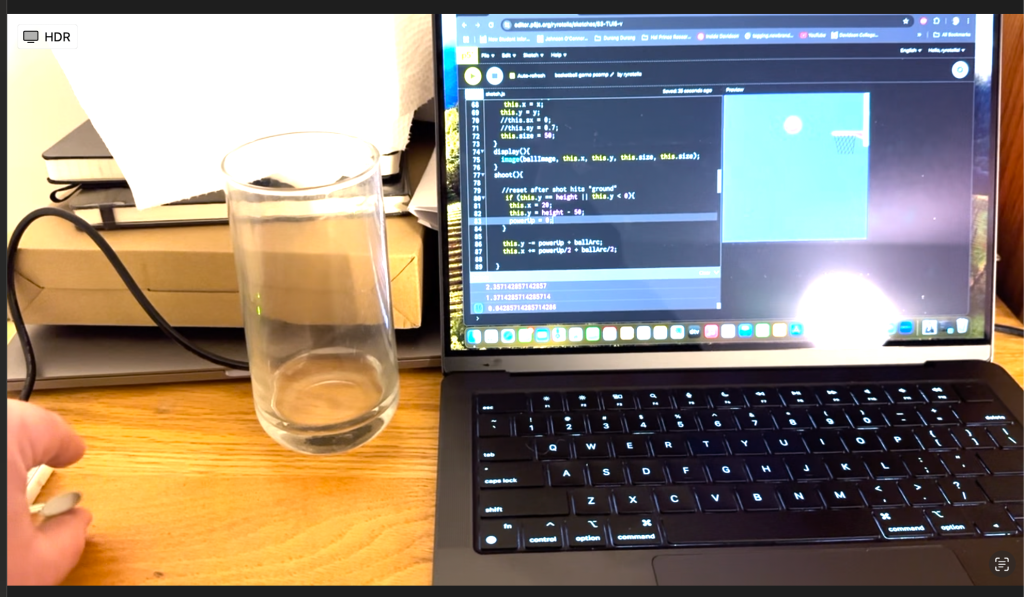
The first part of the lab served as a reminder from last week’s lab, reinforcing how serial communication works between Arduino and P5. I set up the potentiometers and switch on my breadboard. I set up the code in Arduino and P5.js respectively. First, I tested to make sure my inputs and code was working…
-
PComp Lab: Week 7, Serial Communication
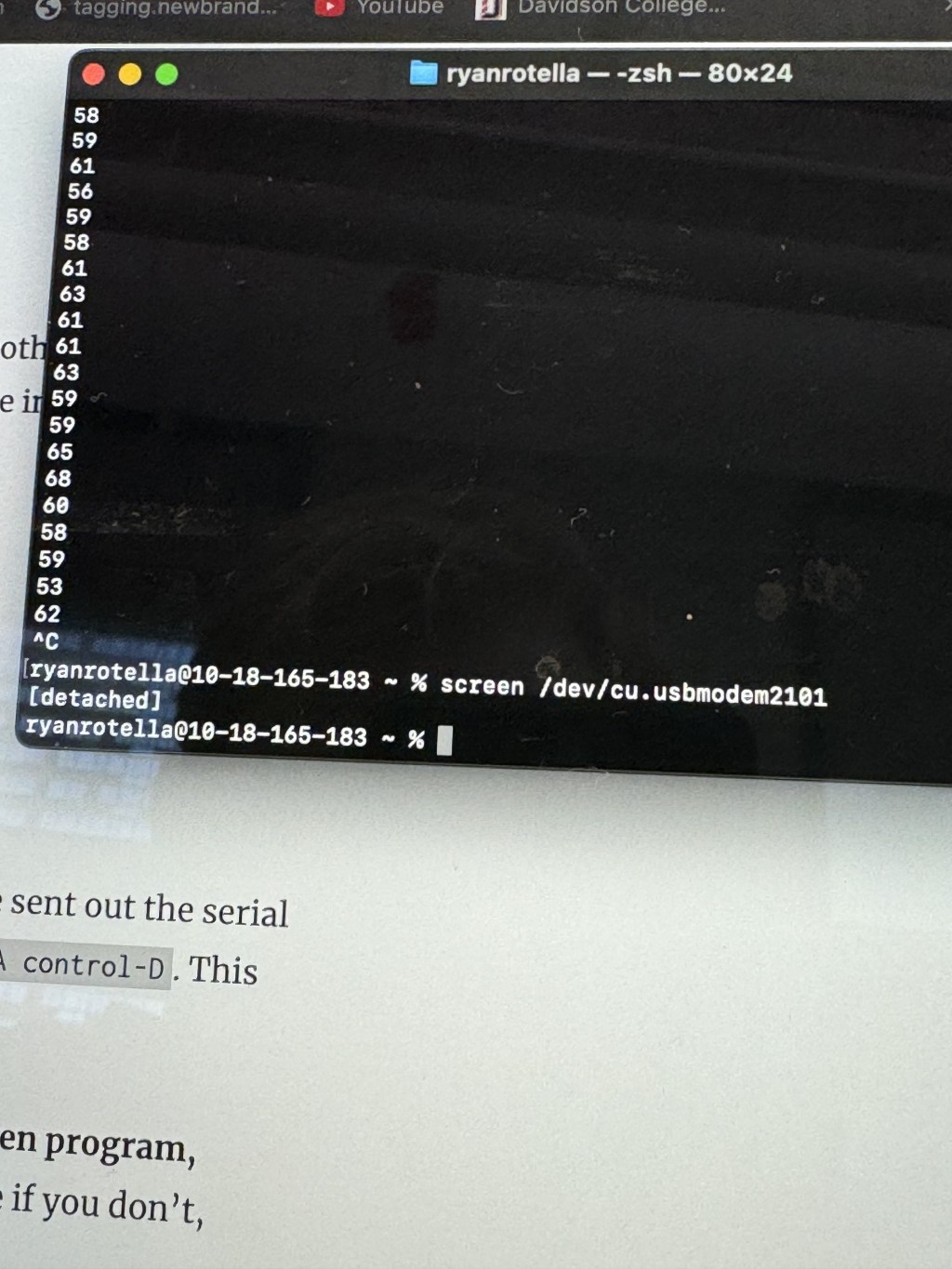
Lab: Intro to Asynchronous Serial Communications As a reprieve from our midterm work, I enjoyed digging deeper into how our computer and other computers can interact with microcontrollers. This part of the lab was a straightforward setup of how data gets communicated serially. The initial view of the data was all cluttered, and I welcomed…
-
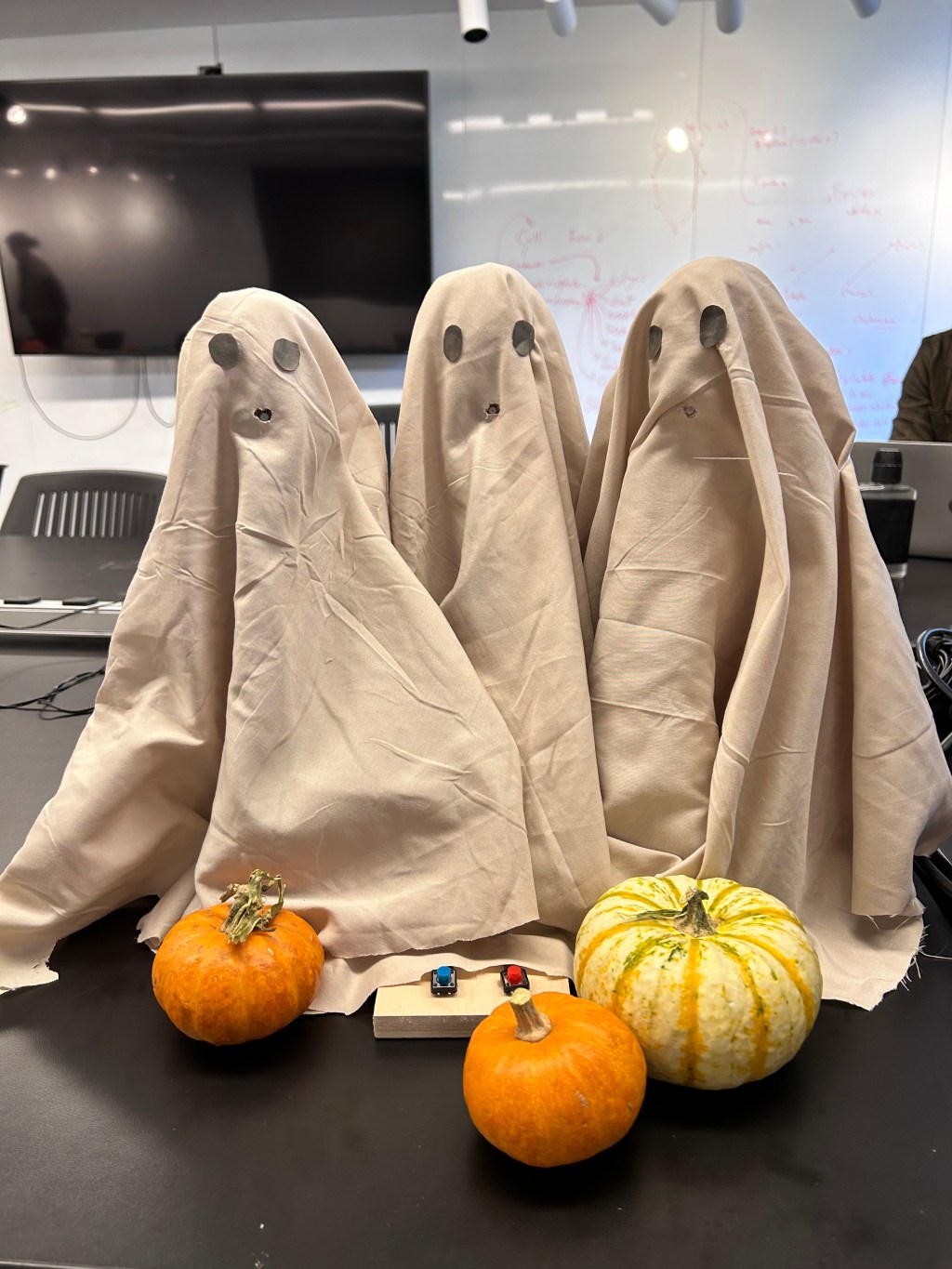
Midterm: Ghost Wheeze
Concept A Halloween themed prank toy that uses servo motors to pull cable ties down on a Febreze bottle’s trigger at the press of a button. There are two modes for our interactive Ghost Cough piece: one, a gambling mode where a user may or may not get sprayed; two, a sampling mode where a…
-
PComp Lab 4///Midterm Progress
I look forward to going over this lab in class because I could not get the DC motor to work. Sunday night, I followed the diagram wiring closely. But my setup did not work. The next day, I tried the Lab: DC Motor Control Using an H-Bridge. I followed the diagram again, and I thought…
-
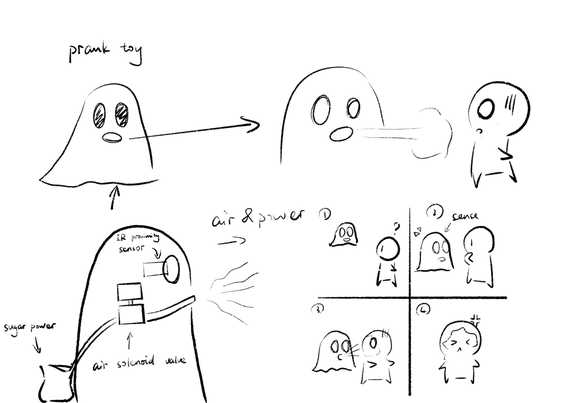
Physical Computing Midterm: Brainstorm
Prompt: Even though the setting is relaxed – a Tuesday afternoon “party” – you can use this as a chance to think through serious interaction design principles. What experience do you want to create? Who is your audience, and what expectations will they bring to the interaction? How do you incorporate the theme (Halloween)? How can you…
-
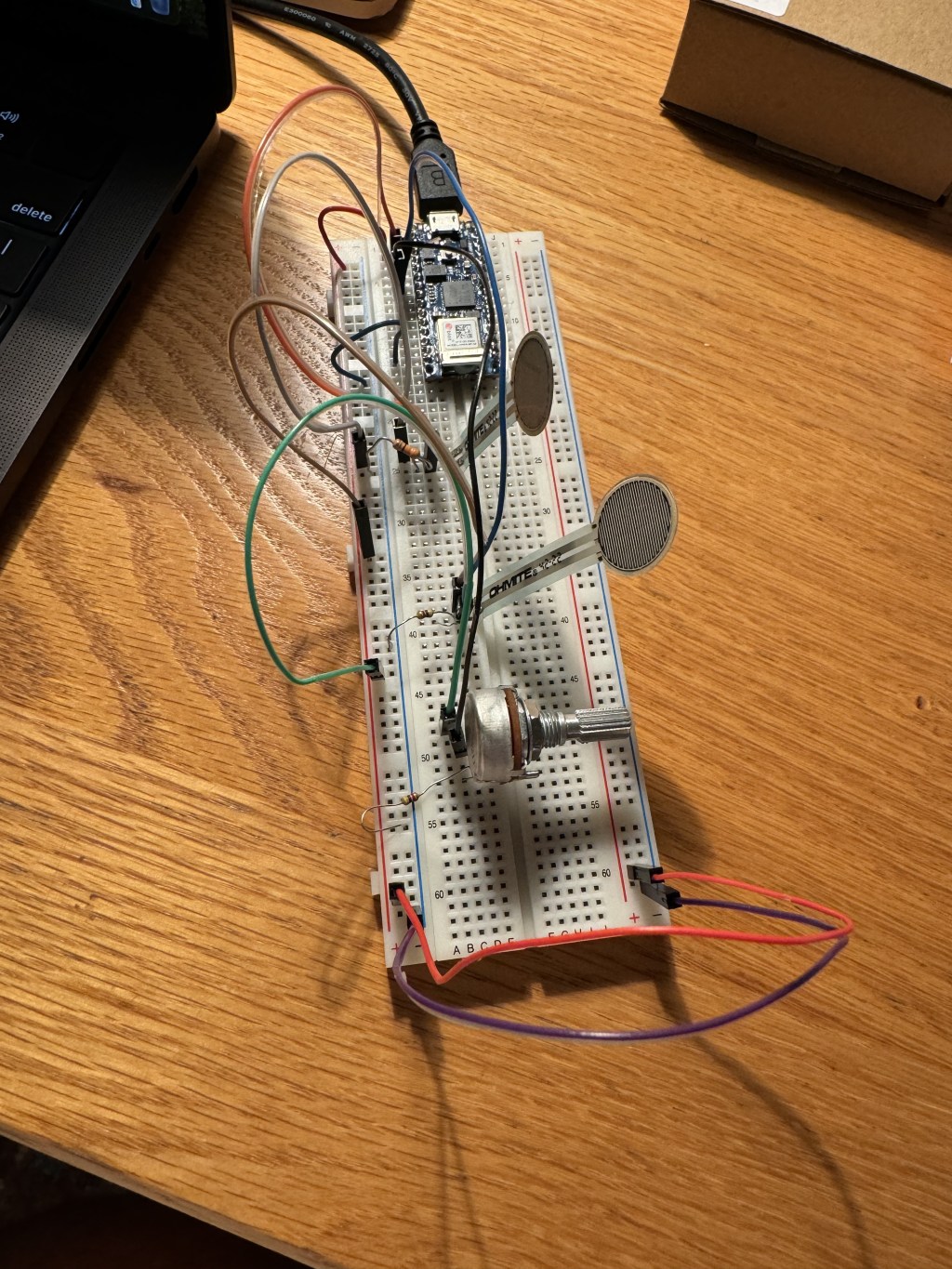
Lab 3: Analog Output
Part 1: Tone Output After learning about digital output last week (digital output being a binary output, i.e. a switch turning on or off), I learned about analog output, an output that gives a range of values, in this lab. The primary output of this part of the lab was sound. This was very fun…
-
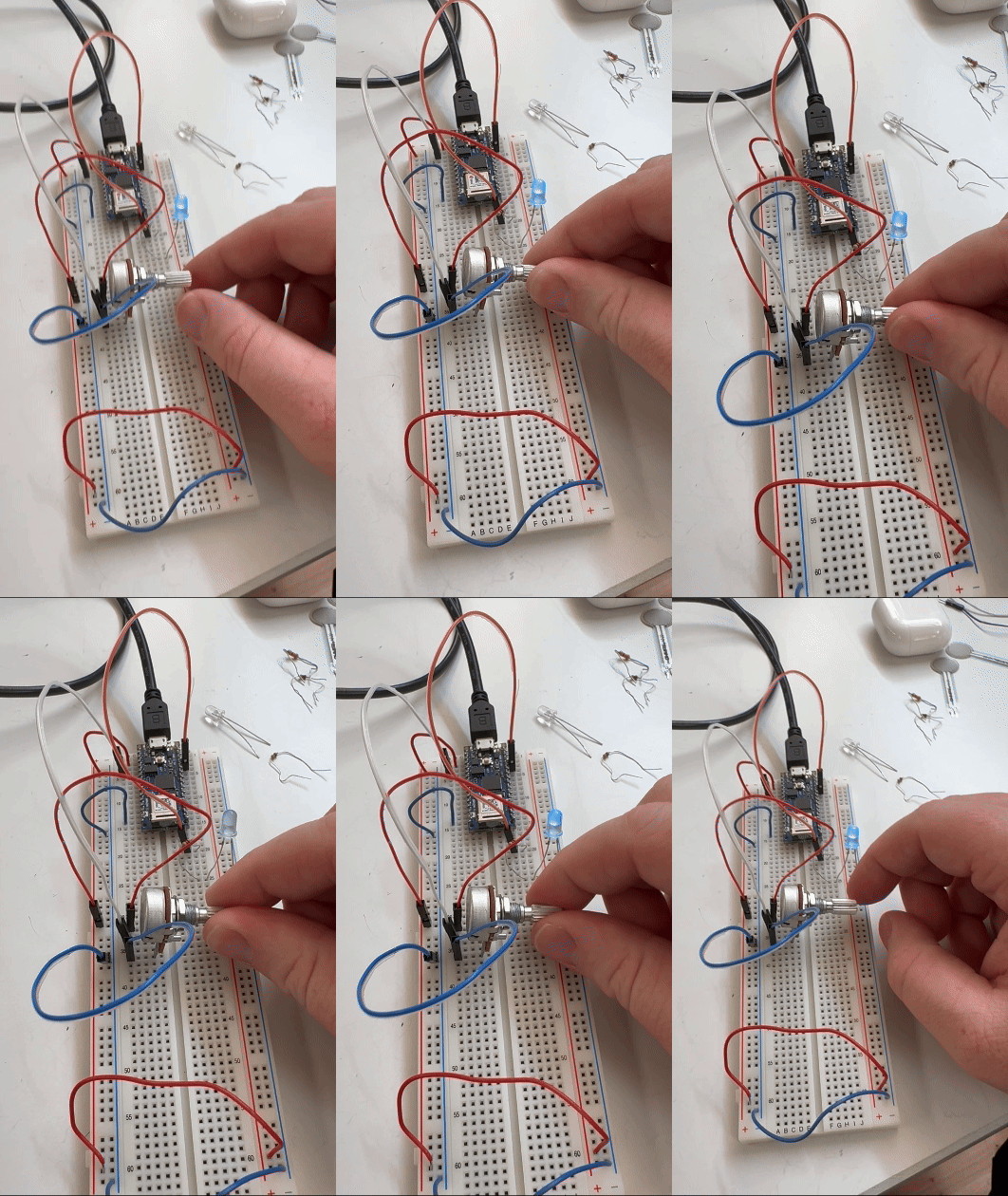
Lab 2: Microcontroller Basics
Before starting the labs, I read through all of the materials listed above it on https://itp.nyu.edu/physcomp/week-to-week-activity/. What struck me again is just the marvel that computing all works somehow. It continues to be a mystery to me that we can harness electricity and direct it with screens, words, and pins on a little board. How…
-
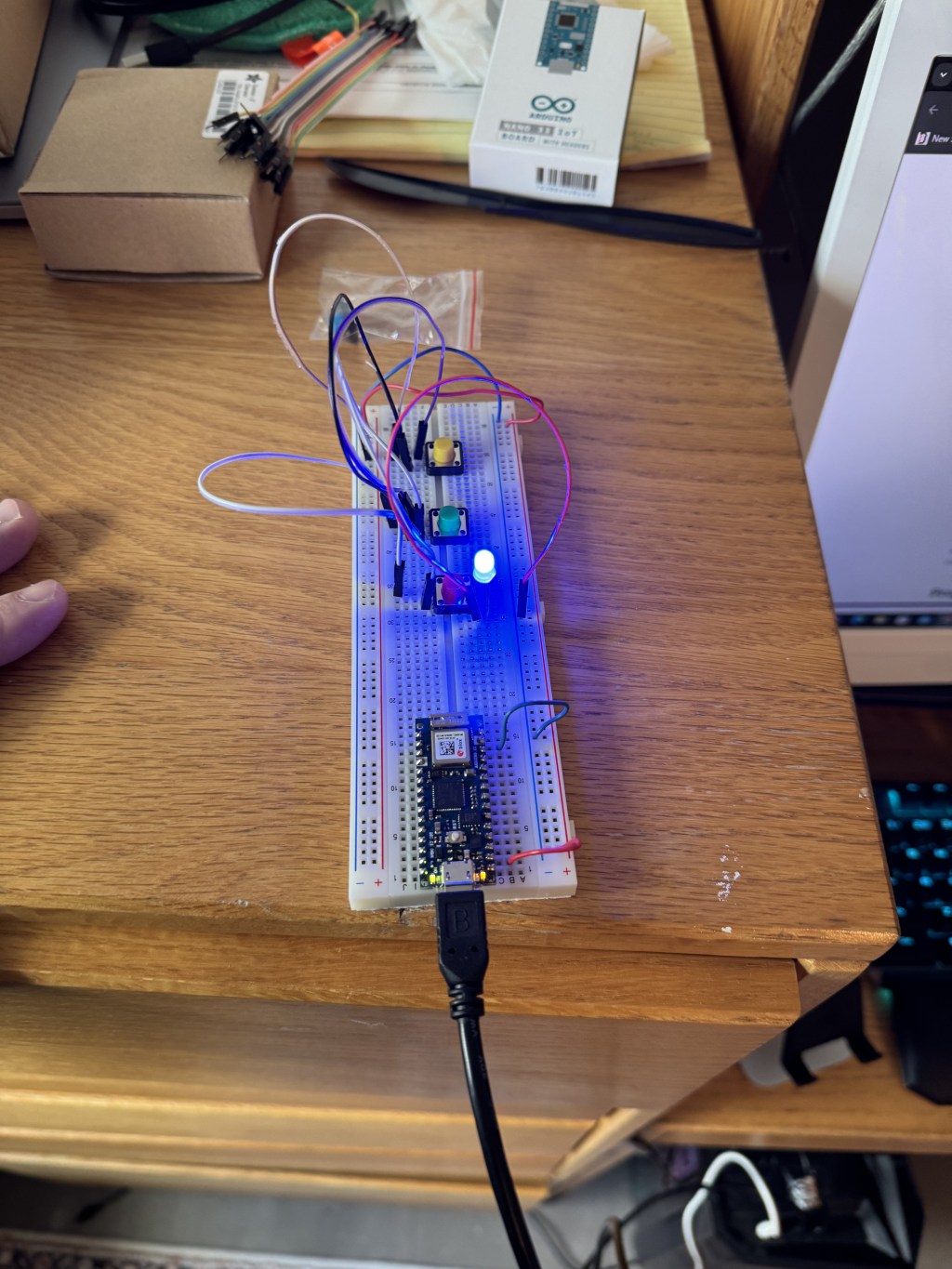
Notes from Lab 1: Electronics
On Friday evening before attending a lovely gathering with other ITP people playing shuffleboard, I read the basics of Electricity. The “basics” outlined a lot of information. The materials objectively helped a lot, especially the metaphor of an avalanche to explain voltage, current, and resistance (height of mountain/potential energy of event is voltage, amount of…
 Ryan Rotella