Concept
With the help of my group (Michael, Galt, and Summer), I want to explore the emotional and cultural relationship between the movements of male athletes on the American football field, how this creates emotional bonds between competitors as well as spectators.
Inspiration
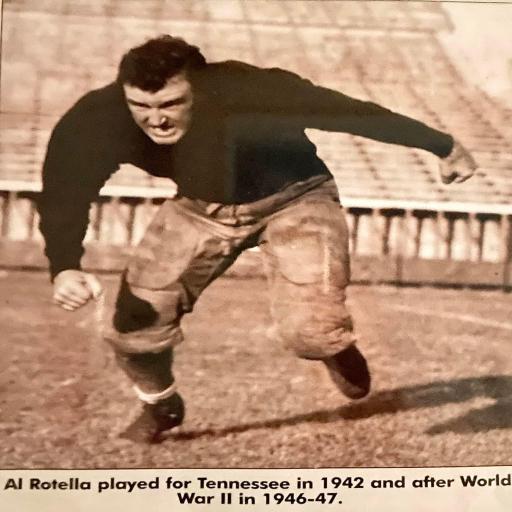
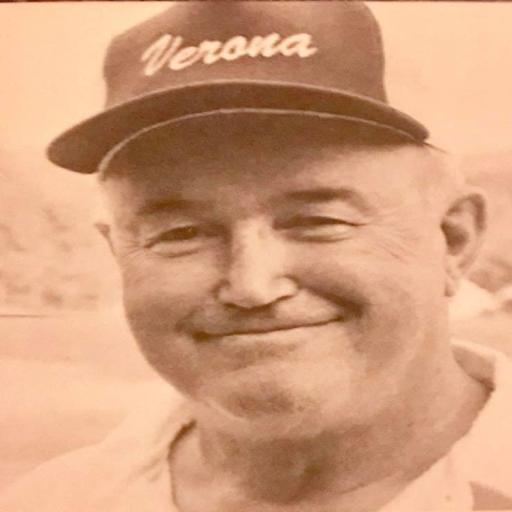
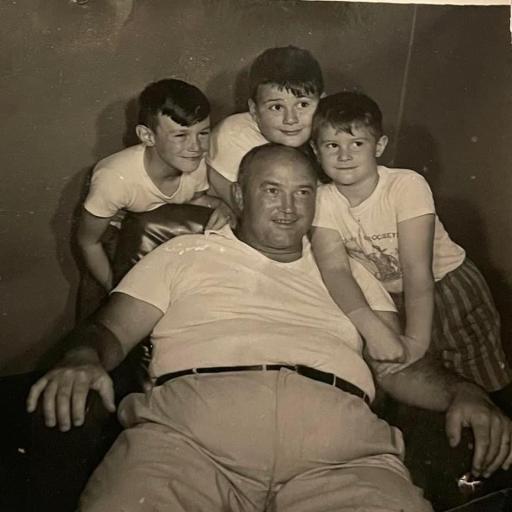
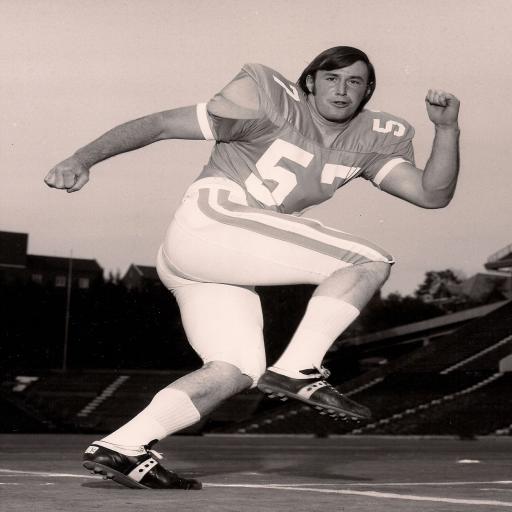
This concept of exploring masculine movements in American football emerged from my family’s history and my life. My grandfather played college football and coached high school football for over 40 years. He made my dad and my two uncles play so that they could get scholarships to college and access social mobility for our family. They all succeeded in doing so. In the process of playing football, my dad and uncles formed male friendships that would last for decades. Friends in made in other contexts did not match the intimacy they felt with the men they played football with in the 1970s.


I tried playing football in high school, but I ended up quitting after 2.5 years. I did not want to be aggressive all the time. I had trouble being violent on command. However, I still enjoy watching football (while grappling with the problems of spectating violence), and I am fascinated on why so many men and I form emotional attachments to men we’ll never meet who happen to wear certain clothes and equipment.
History
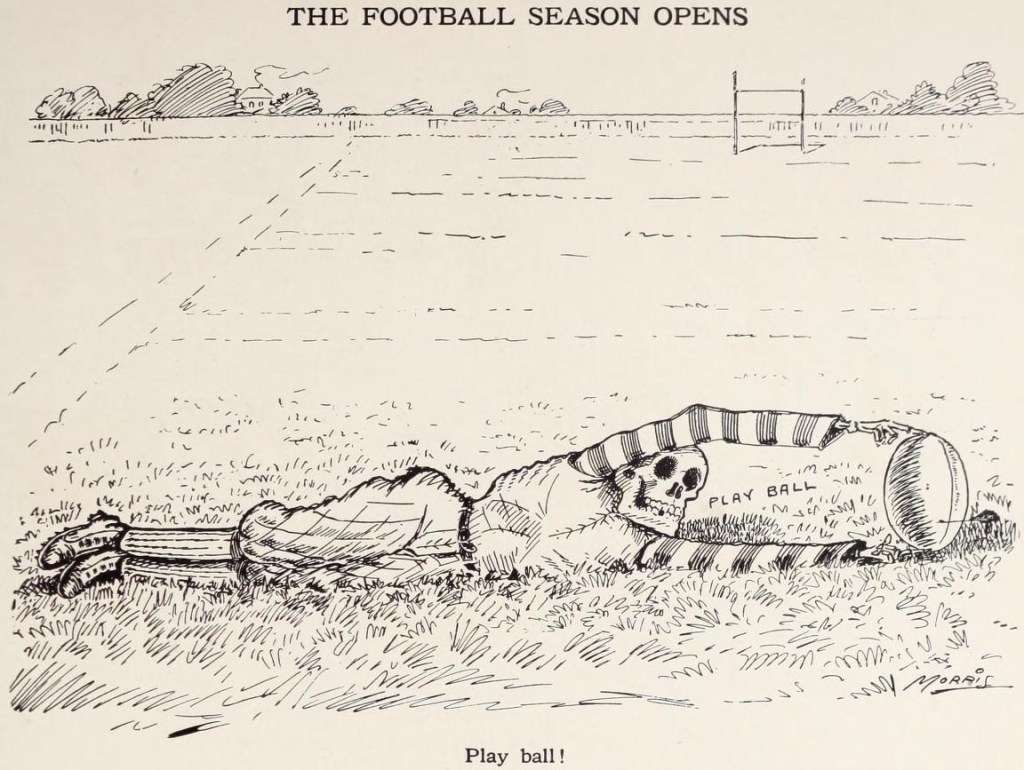
On November 6, 1869, Rutgers University and Princeton University played what many consider to be the first American football game, according to PFRA. The game back then more closely resembled rugby. In those early years, football had more chaos and more uncontrolled violence. The young men at Ivy League institutions felt insecure in their combat ability, as their fathers and forefathers had direct experience in combat. Football was so violent then that the White House had to intervene. In 1905, 26 players had been killed on the football field that year alone. According to NPR: “The president of Stanford, disgusted, called football ‘rugby’s American pervert.’” Over various rule changes, safety improvements in equipment and science, and money from big media companies flooded the sport, football has transformed into the billion dollar American industry we know today.
Methodology and Conclusion
The main ethnographic methods for this project will be observation and interviews. Football has so much footage of it and media coverage that analyzing movements will be straightforward. With interviews, I want to draw out the emotional foundation for the sport and its meaning to its fans and participants. Ultimately, I want to slow down the movements and emphasize the intimacy and precision of the men. Aside from making money and acquiring fame, the men who play football do it from a deep passion. Why is there so much passion there? Why for so many men is that the most expressive passion, more than most of the other areas of their life?
That question could be a life’s work to explore and analyze. For this class, I want to scan myself into 3D space and perform the moves that my father taught me and that I’ve seen on TV. I also want an audience to enjoy the movement but also question their source of pleasure in this interaction. I believe it’s feasible for a prototype of this idea to manifest in this class. Since I will be the primary subject, I will only need to convince myself (done). However, if I need another person to fit into a mocap suit and perform the moves, I will need their permission to use their likeness that I intend for an audience to view and analyze. In the interviews, I will approach subjects with respect, zero judgment, and pure curiosity for how they behave and feel.
Sources
PFRA: https://www.profootballresearchers.com/articles/No_Christian_End.pdf
NPR: https://www.npr.org/2009/11/18/120502601/when-footballs-deadly-brutality-outraged-america


 Ryan Rotella
Leave a reply to leslierotellagmailcom Cancel reply